Tag: English

  • Who Does Taylor Swift Like — Malaysia or Singapore? The Swifties / Striptease Confusion!

    Who Does Taylor Swift Like — Malaysia or Singapore? The Swifties / Striptease Confusion!

    This is the English version. Watch the Mandarin or French version below ↓

    A funny exchange in Malaysia’s Parliament. A concert remembered in Kuala Lumpur. Six huge shows in Singapore. And a business story that reaches across the Causeway.

    Who does Taylor Swift like — Malaysia or Singapore? That playful question opens this FindingOut Malaysia film about the excitement, rivalry and economic pull surrounding a global superstar. From the “Swifties / striptease” confusion to Singapore’s exclusive concert arrangement, there is more here than a catchy headline.

    This is the refreshed English edition, with smoother narration, updated visuals and a revised edit. The original video remains available on our YouTube channel. Running time: approximately 2 minutes 11 seconds.

    “Swifties” or “Striptease”? A Moment in Parliament
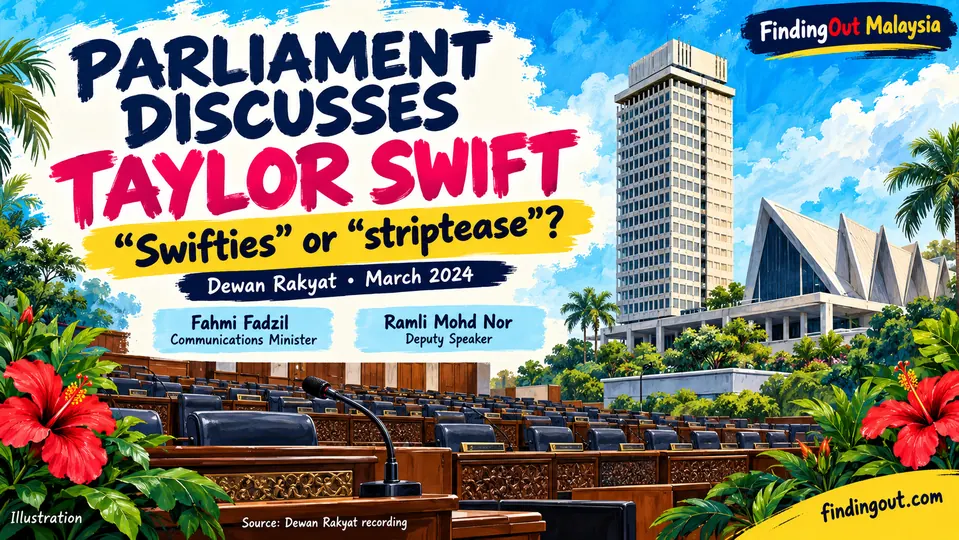
    Illustrated card about Fahmi Fadzil and Deputy Speaker Ramli Mohd Nor’s Swifties and striptease exchange in Malaysia’s Parliament on 13 March 2024
    An illustrated recap of the exchange in the Dewan Rakyat, 13 March 2024.

    “Swifties” is the familiar name for Taylor Swift’s fans. During a Dewan Rakyat exchange on 13 March 2024, Communications Minister Fahmi Fadzil referred to them, prompting Deputy Speaker Ramli Mohd Nor to respond with “Striptease?” Fahmi clarified that he meant Taylor Swift’s fans, and laughter followed. The exchange is recorded in the official parliamentary transcript, printed page 73.

    The film revisits that brief misunderstanding before turning to the larger question: why can a pop concert become a matter of national conversation?

    Malaysia Has Its Own Taylor Swift Memories

    Taylor Swift’s connection with Malaysia did not begin with the 2024 debate. She brought The RED Tour to Kuala Lumpur in June 2014. Concert sponsor AIA’s contemporary account describes a sold-out show at Putra Indoor Stadium, with nearly 8,000 people singing along. The refreshed film looks back at that visit and the enthusiasm of Malaysian fans. Read AIA’s concert account.

    Why Was Singapore the Only Southeast Asian Stop?
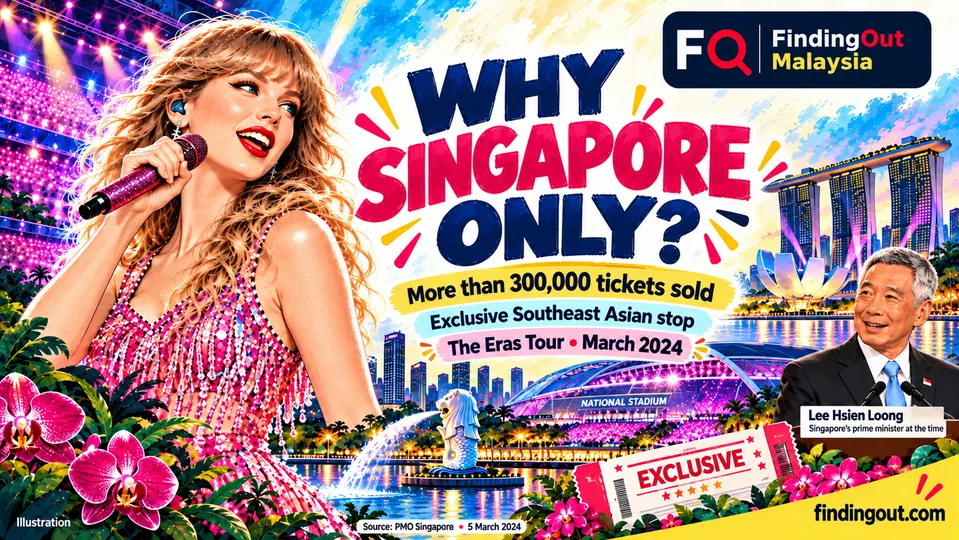
    Illustration of Taylor Swift’s six Singapore concerts in March 2024 and Lee Hsien Loong explaining the exclusive Southeast Asian arrangement
    Singapore’s exclusive Southeast Asian stop for the 2024 Eras Tour. Lee Hsien Loong was Singapore’s prime minister at the time.

    The Eras Tour played Singapore’s National Stadium on 2, 3, 4, 7, 8 and 9 March 2024. Singapore was the tour’s only Southeast Asian stop, as confirmed by official presenting partner Marina Bay Sands.

    At a press conference on 5 March 2024, then-prime minister Lee Hsien Loong explained that Singapore’s agencies had negotiated an arrangement supported by incentives from a post-pandemic tourism recovery fund. He described it as successful and did not regard it as unfriendly to neighbouring countries. That explanation is available in the official PMO transcript.

    The arrangement helps explain the tour itinerary. It does not establish which country Taylor Swift personally prefers.

    More Than Tickets: The Economic Pull
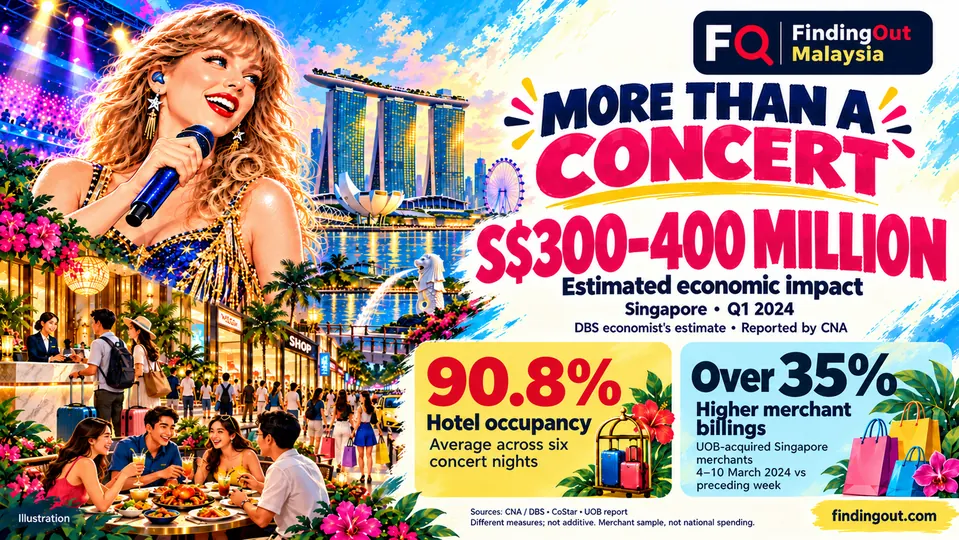
    Illustrated summary of the estimated S$300–400 million economic impact, 90.8% hotel occupancy across six concert nights, and over 35% growth in UOB-acquired merchant billings during the stated March 2024 comparison period
    Three different measures of activity around the concerts. The figures cover different periods and should not be added together.

    Travelling fans need accommodation, meals, transport and places to shop. The video follows those connections beyond the stadium. Three figures help explain the scale, provided their definitions stay clear:

    • S$300–400 million: DBS economist Chua Han Teng’s estimated contribution to Singapore’s economy in the first quarter of 2024, as reported by CNA. This was an estimate, not an audited profit figure.
    • 90.8% hotel occupancy: the average across Singapore’s six concert nights, according to CoStar hospitality data. This is an occupancy level, not a percentage increase.
    • Over 35% higher merchant billings: UOB reported this rise for its acquired merchants in Singapore during 4–10 March 2024 compared with the preceding week. It describes that merchant sample, not all spending across Singapore.

    Across the Causeway

    Some of the benefits also reached Johor Bahru. In its 15 April 2024 research report, RHB described concert-related business for local hotels, retailers, food and beverage outlets, and transport operators taking fans across the Causeway. Singapore hosted the performances, while nearby Malaysian businesses could still participate in the travel surrounding them.

    Smart Business or an Unfair Advantage?

    That is the question the film leaves with viewers. An exclusive deal can help a destination attract visitors and spending, while fans elsewhere face extra travel and expense. Taylor Swift’s drawing power turned a series of concerts into a discussion about tourism strategy, competition and the ties between neighbours.

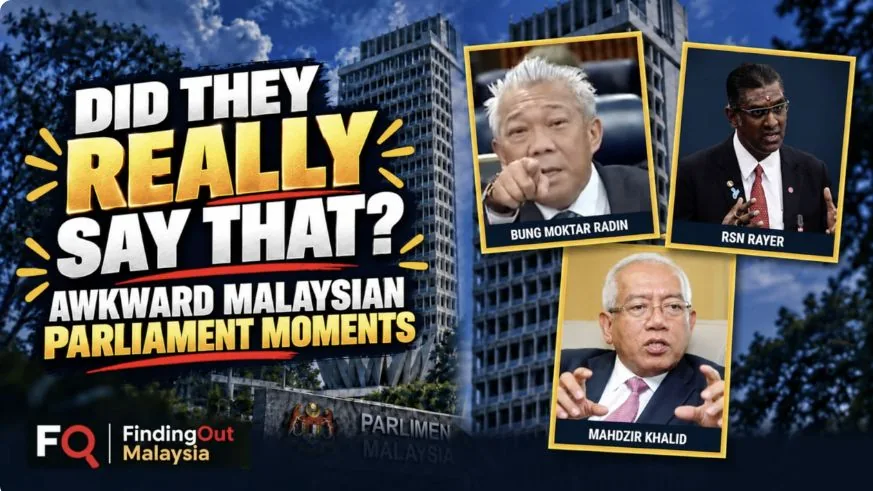
    For the wider relationship behind this episode, explore Malaysia vs Singapore: A War Without Bullets? For another look inside the Dewan Rakyat, see They Really Said It: Awkward Malaysian Parliamentary Moments.
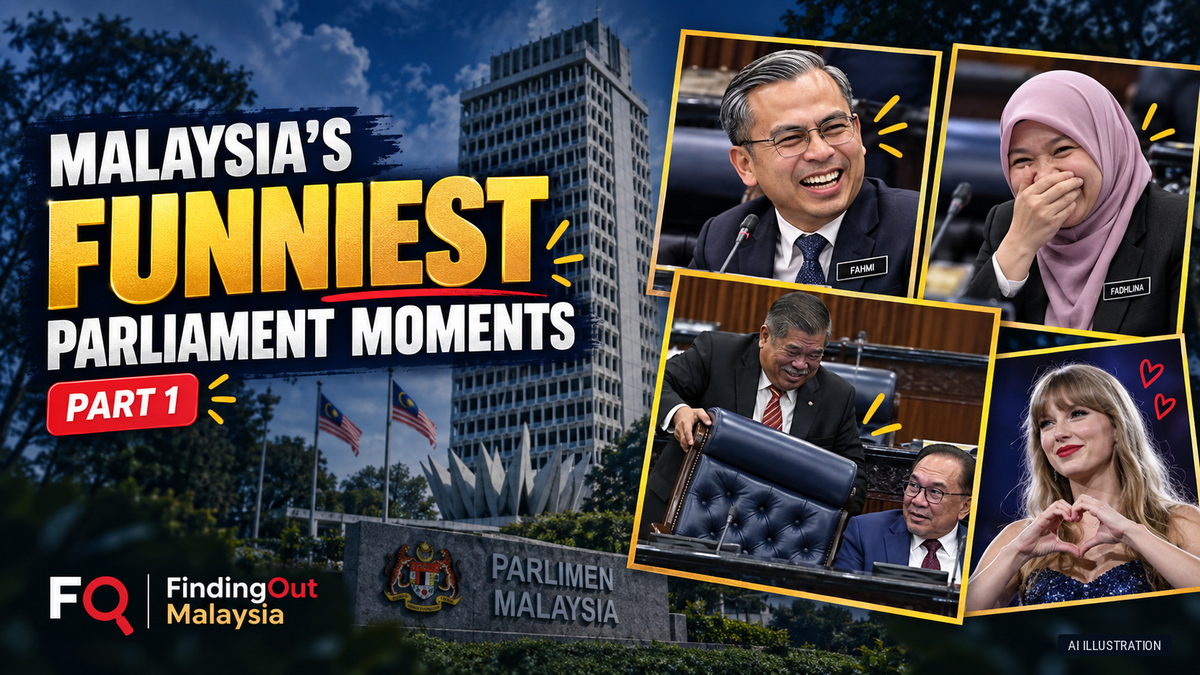
    Visual note: the cover and supporting cards are AI-generated illustrations. The video combines commentary, archive material and illustrative scenes; the full production credits are in the YouTube description.

    Watch the French version

    Prefer to watch in French? Enjoy the French edition below.

    French · 2 minutes 11 seconds

    Watch the French version on YouTube →

    Watch the Mandarin version

    Prefer to watch in Mandarin? Enjoy the Mandarin edition of the same story below.

    Mandarin · 2 minutes 12 seconds

    Watch the Mandarin version on YouTube →

    Watch next

    Enjoy looking a little deeper? Subscribe to FindingOut Malaysia on YouTube for new videos.

  • Malaysia vs Singapore: A War Without Bullets?

    Malaysia vs Singapore: A War Without Bullets?

    This is the English version. Watch the Mandarin version below ↓

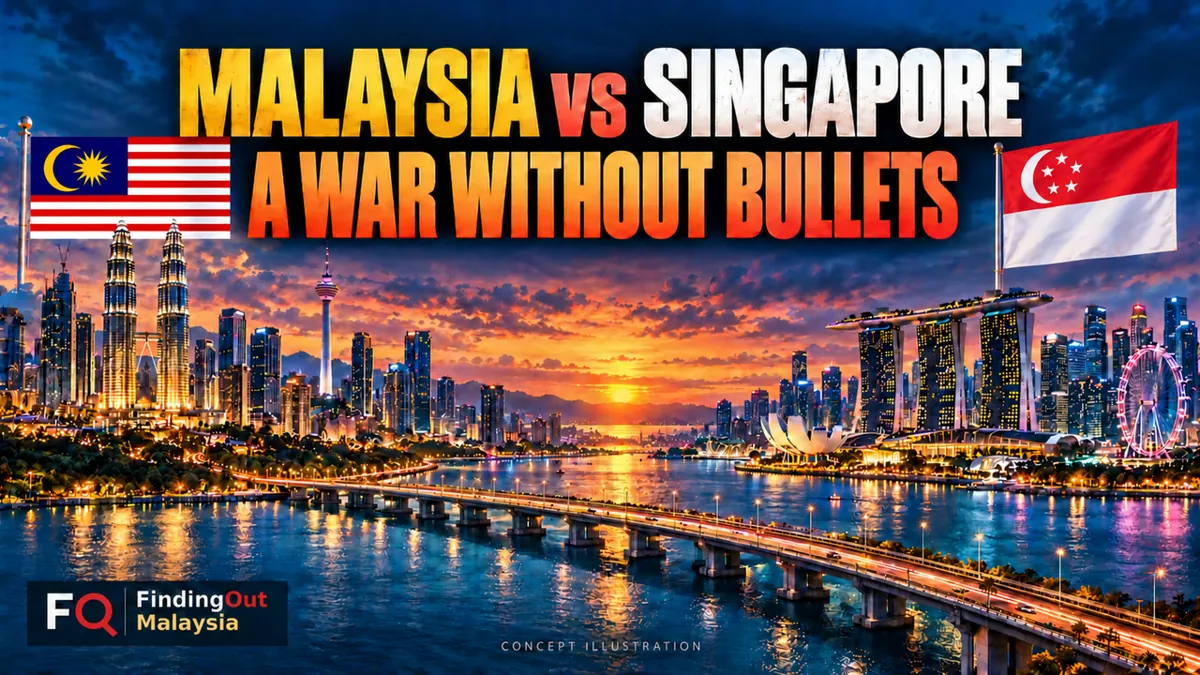
    Two neighbours. Connected families. Decades of arguments over water, bridges, airspace, ships and money. Then came Taylor Swift.

    Malaysia and Singapore share far more than a border. Yet some of their most memorable exchanges have been about the things that divide them. This FindingOut Malaysia documentary follows that uneasy mix of closeness and competition, from the separation in 1965 to border reunions and the business of international concerts.

    “A war without bullets” is a metaphor for diplomatic disagreements and competing national interests. The film is a historical overview and commentary; its military parade footage does not depict hostilities between the two countries.

    1965: A Separation, Not an End to the Relationship

    Singapore became independent on 9 August 1965. Lee Kuan Yew’s emotional televised press conference remains one of the defining images of that separation. The Singapore government’s historical account records both the political split and his reaction.

    The border created two sovereign states, but it did not neatly divide family connections, working lives or shared resources. That tension runs through the film: the countries can disagree sharply while remaining deeply connected.

    Water and the Bridge That Never Was

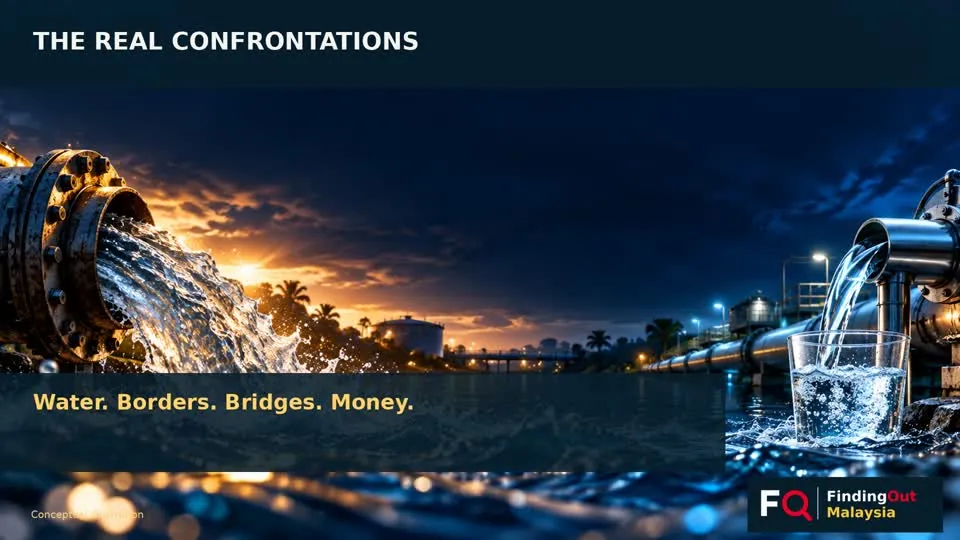
    FindingOut concept graphic introducing disputes over water, borders, bridges and money
    Water, borders, bridges and money: the film’s central themes. Concept illustration.

    The water debate is about the value of an essential resource and the terms of a longstanding agreement. Under the 1962 agreement, Singapore pays 3 Malaysian sen per 1,000 gallons of raw water, while Johor can buy treated water at 50 sen per 1,000 gallons. The agreement runs to 2061. These terms are set out in Singapore’s published account of the water agreements.

    The film includes Mahathir Mohamad’s disputed “3 sen versus RM60” comparison. It contrasts a raw-water purchase price with a treated-water retail charge. Those are different measures, so the comparison should not be read as a calculation of Singapore’s profit or as the price Johor pays for treated water.

    The proposed “crooked bridge” offers another example of how infrastructure became entangled with bilateral negotiations. Malaysia considered replacing its portion of the Causeway with a curved bridge, but abandoned the proposal in 2006. A contemporary statement by Malaysia’s Foreign Ministry, reproduced by the Malaysian Bar, explains the competing proposals and the decision not to proceed.

    Airspace and a Line in the Water

    In 2018–2019, disagreements over Seletar Airport’s landing procedures and a restricted area over Pasir Gudang brought aviation into the argument. The film includes Anthony Loke’s explanation of Malaysia’s concerns. The subsequent agreement matters too: Singapore withdrew the instrument landing procedures and Malaysia indefinitely suspended the restricted area, effective late on 5 April 2019, according to the joint transport ministers’ statement.

    At sea, overlapping port limits around Johor Bahru and Tuas created another dispute. On 8 April 2019, both countries suspended the overlapping limits as a step towards easing tensions and further boundary discussions. The Maritime and Port Authority’s announcement records that mutual suspension. The film’s maps are schematic illustrations, not surveyed boundaries.

    The Train That Left a Bill

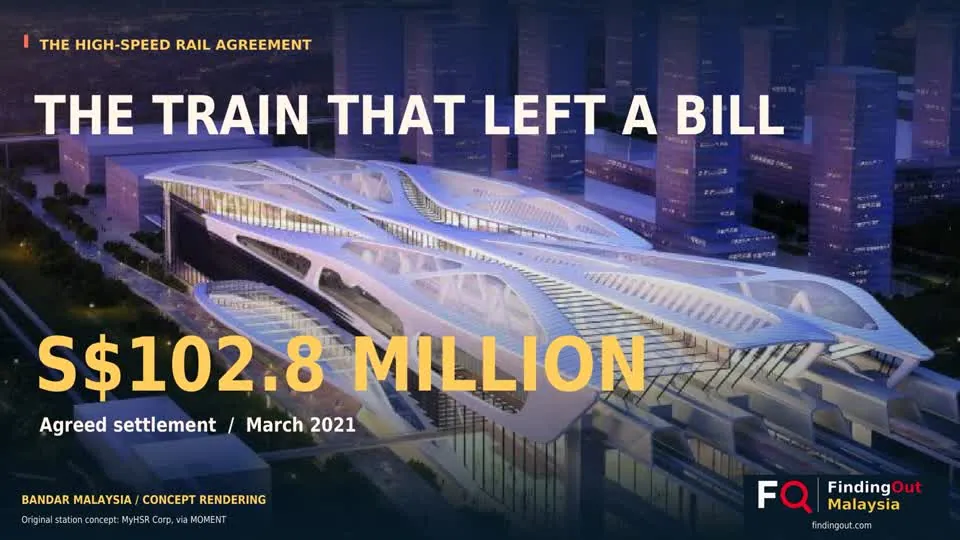
    FindingOut graphic showing the historical S$102.8 million Kuala Lumpur–Singapore high-speed rail settlement in March 2021
    The March 2021 settlement. The station image is a project concept rendering, not an operating HSR service. Original concept credit: MyHSR Corp, via Moment Solutions.

    The Kuala Lumpur–Singapore High-Speed Rail project turned the relationship into a discussion about costs and commitments. Following termination of the bilateral agreement on 31 December 2020, Malaysia paid Singapore S$102,815,576, with the joint statement of 29 March 2021 recording RM320,270,519.24 as the ringgit amount.

    It was an agreed full and final settlement for development and suspension-related costs. These are historical figures from that settlement, not a conversion at today’s exchange rate or a claim about the status of any later rail proposal.

    When the Border Closed, Families Felt It

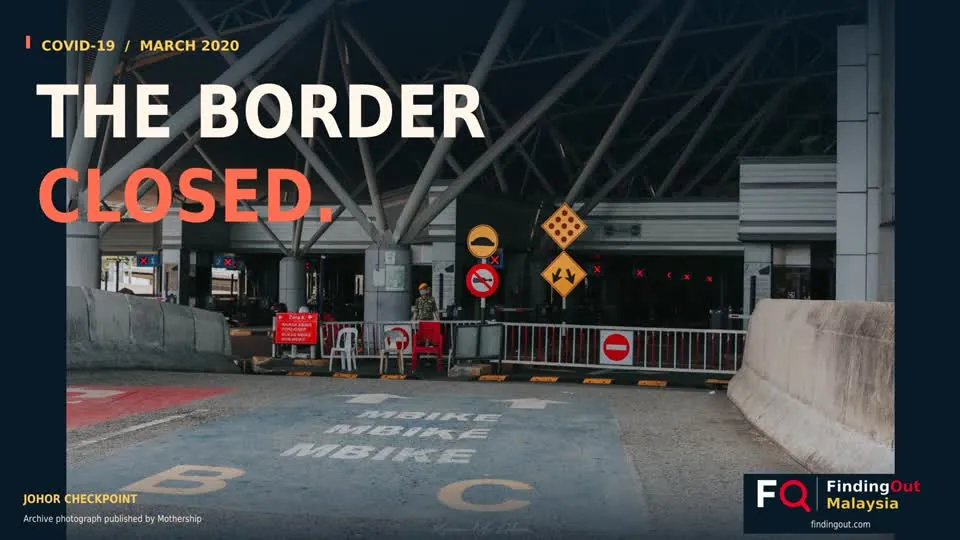
    FindingOut graphic recalling the March 2020 COVID-19 border restrictions at the Johor checkpoint
    March 2020: the pandemic interrupted everyday cross-border life. Checkpoint photograph as credited in the film, published by Mothership.

    The documentary then moves from government disputes to ordinary people. COVID-19 border restrictions separated workers from their families and interrupted journeys that had once been routine. The reunion footage shows the human side of the relationship: jobs on one side, loved ones on the other.

    The scenes of reopening refer to 1 April 2022, when the land borders reopened more broadly to fully vaccinated travellers. Some limited travel arrangements had already existed. The official reopening announcement explains what changed at that time.

    Then Came Taylor Swift

    FindingOut illustration of Taylor Swift holding a microphone, surrounded by Malaysian and Singaporean landmarks
    FindingOut illustration accompanying the discussion of Singapore’s exclusive Southeast Asian stop on the 2024 Eras Tour.

    The final turn is from border crossings to concert crowds. On 5 March 2024, then Singapore prime minister Lee Hsien Loong confirmed that agencies had negotiated an arrangement making Singapore Taylor Swift’s only Southeast Asian stop for the 2024 Eras Tour, with incentives from a tourism recovery fund. In the official press-conference transcript, he defended the deal as beneficial to Singapore and rejected the suggestion that it was unfriendly.

    That was an arrangement for the 2024 tour, not a permanent restriction on where the artist could perform. The film closes by placing two generations of Singapore’s leadership alongside a question for viewers: are these good neighbours, or simply neighbours who put their own interests first?

    Explore the Video

    The video is in English and runs approximately 4 minutes 35 seconds. These chapter links open the relevant moment on YouTube.

    Sources & Editorial Note

    The linked official statements and historical records provide context for the events discussed. The documentary combines archival excerpts, original recorded speech, AI narration, stock footage and editorial graphics. The cover and some other visuals are concept illustrations. Archive excerpts are shortened or reframed; the Anthony Loke excerpt is slowed to 75%. Recorded speakers’ voices are not AI imitations.

    Archive and image credits include CNA/Mediacorp, Times Now World, observer+ / Astro Awani, Anthony Loke’s published footage, Singapore-released maritime footage via Mothership, SSTV, Malay Mail, The Straits Times, TODAY, MyHSR Corp and credited concert photographers. Full source links, photo licences and music credits are recorded in the video description. Third-party rights remain with their owners; the presentation does not imply endorsement. For corrections, please use our contact page and identify the relevant passage or timestamp.

    For more FindingOut stories, explore What If Everyone Is Wrong About Malaysia? or They Really Said It: Awkward Malaysian Parliamentary Moments.

    Watch the Mandarin version

    Prefer to watch in Mandarin? Explore the same story in 马来西亚与新加坡:一场没有子弹的战争?

    Mandarin · 4 minutes 33 seconds

    Watch the Mandarin version on YouTube →

    Watch next

    Enjoy looking a little deeper? Subscribe to FindingOut Malaysia on YouTube for new videos.

  • Malaysia’s Funniest Parliament Moments — Part 1

    Malaysia’s Funniest Parliament Moments — Part 1

    Parliament is serious business — but not every moment goes according to plan.

    Malaysia’s Dewan Rakyat has seen its share of heated debates, political arguments and serious policy discussions. Every now and then, however, something completely unexpected happens and the chamber becomes unintentionally funny.

    In Part 1 of Malaysia’s Funniest Parliament Moments, FindingOut Malaysia looks back at three lighter moments: a pop-culture misunderstanding involving Taylor Swift, a perfectly timed comeback from the Education Minister, and a piece of quiet visual comedy unfolding behind the Opposition Leader.

    Watch the video below, or scroll down for the story behind each moment.

    This is the English version. Scroll down for the Malay, Mandarin and Tamil versions of Part 1.

    Moment 1 — A Parliamentary Misunderstanding

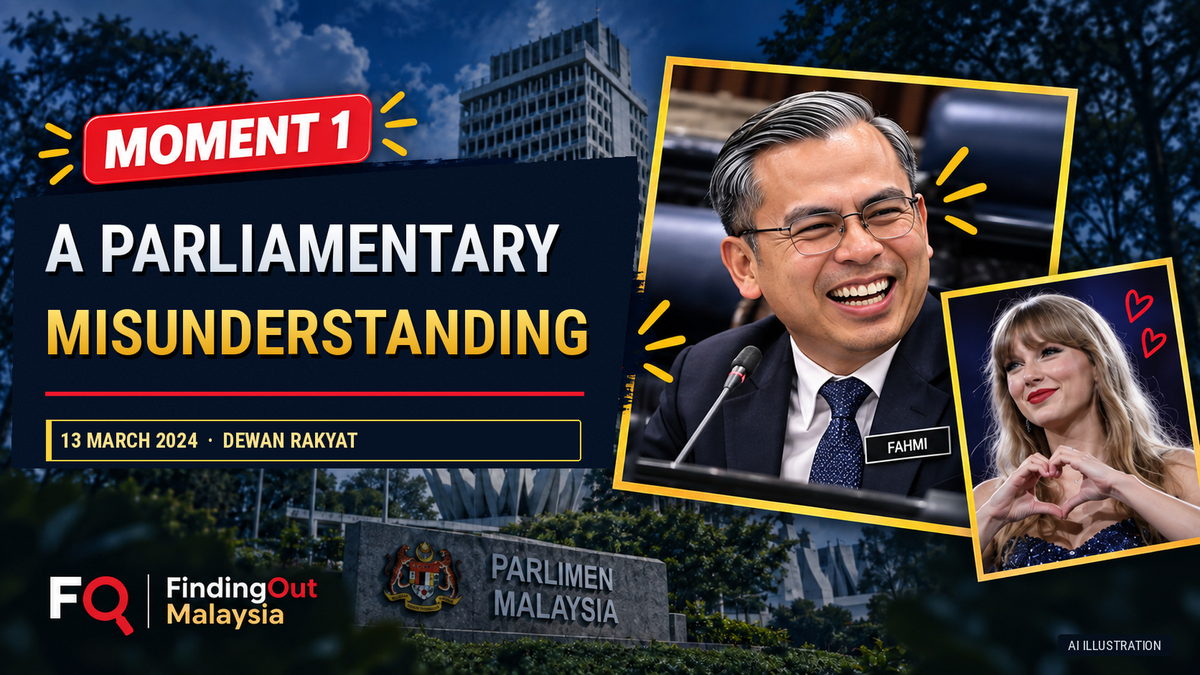
    Fahmi Fadzil and Taylor Swift graphic for a parliamentary misunderstanding in Malaysia’s Dewan Rakyat

    13 March 2024 · Dewan Rakyat

    Communications Minister Fahmi Fadzil was speaking about Taylor Swift and her fans when an otherwise ordinary pop-culture reference suddenly caused confusion in the chamber.

    Taylor Swift’s fans are commonly known as “Swifties.” But when Fahmi used the term, Deputy Speaker Ramli Mohd Nor appeared to hear something quite different — turning “Swifties” into something that sounded remarkably like “striptease.”

    Fahmi quickly clarified what he meant, repeating the reference to Taylor Swift, while the misunderstanding drew amusement from those in the chamber.

    It was a very short exchange, but that was precisely what made it funny: a perfectly innocent word, a momentary misunderstanding, and Parliament briefly trying to keep a straight face.

    Moment 2 — A Perfectly Timed Comeback

    Fadhlina Sidek graphic for a light-hearted Dewan Rakyat exchange in Malaysia’s Parliament

    Education Minister Fadhlina Sidek was winding up her ministry’s debate when she was asked to move a little closer to the microphone.

    What should have been a routine technical adjustment quickly turned into a light-hearted exchange involving Dewan Rakyat Speaker Johari Abdul.

    Fadhlina responded with a line that immediately brought laughter to the chamber:

    “Tan Sri Speaker, my husband is watching this live.”

    Sometimes parliamentary humour does not need a long argument or an elaborate joke. A quick response delivered at exactly the right moment is enough.

    Moment 3 — The Great Chair Squeeze

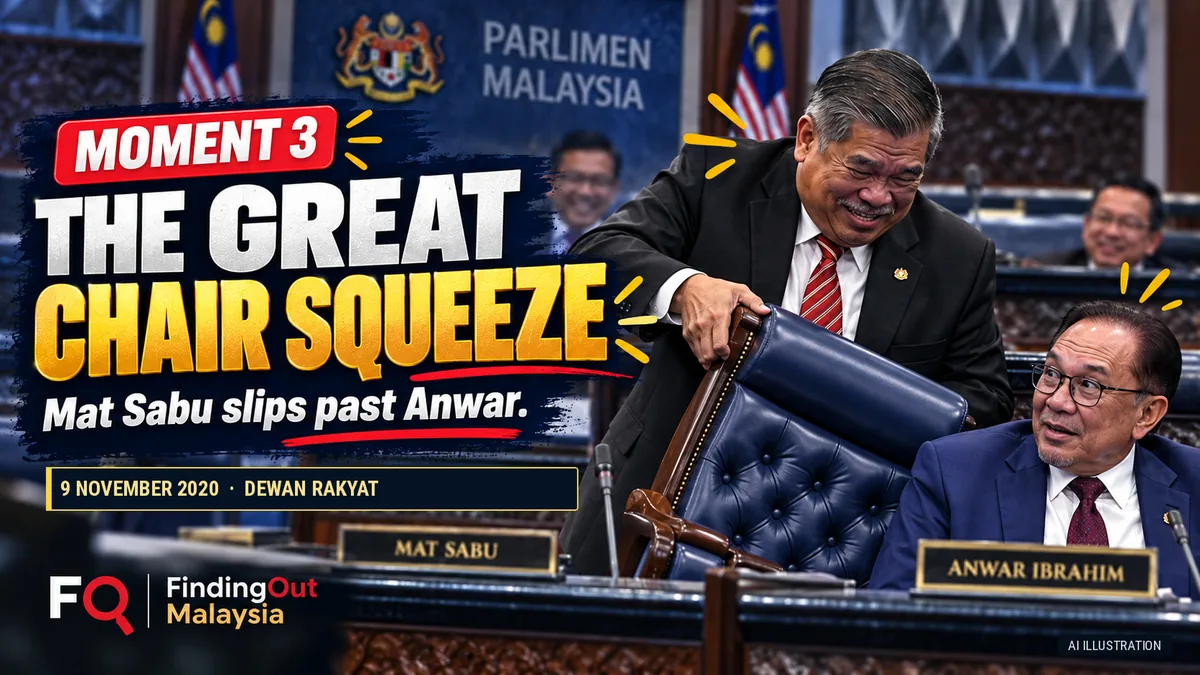
    Mat Sabu and Anwar Ibrahim graphic for the Great Chair Squeeze in Malaysia’s Dewan Rakyat

    9 November 2020 · Dewan Rakyat

    In 2020, Anwar Ibrahim was Malaysia’s Opposition Leader, while Mohamad Sabu — better known as Mat Sabu — was Amanah president.

    As Anwar continued delivering his speech, Mat Sabu attempted to make his way back to his seat behind him. What should have been a straightforward walk past became a small exercise in parliamentary manoeuvring.

    The chair had to move. Mat Sabu had to squeeze through the narrow space. Then everything had to be carefully put back into place — all while Anwar continued speaking.

    It is classic visual comedy precisely because nobody stops to make a joke about it.

    Getting through a debate is one thing. Getting back to your seat is another.

    Continue with Part 2

    These are only three of the lighter moments that have taken place in Malaysia’s Parliament.

    Some are funny because of what was said. Others are funny because of timing, misunderstanding, or simply what happened in the background while serious business continued around them.

    Which moment made you laugh the most?

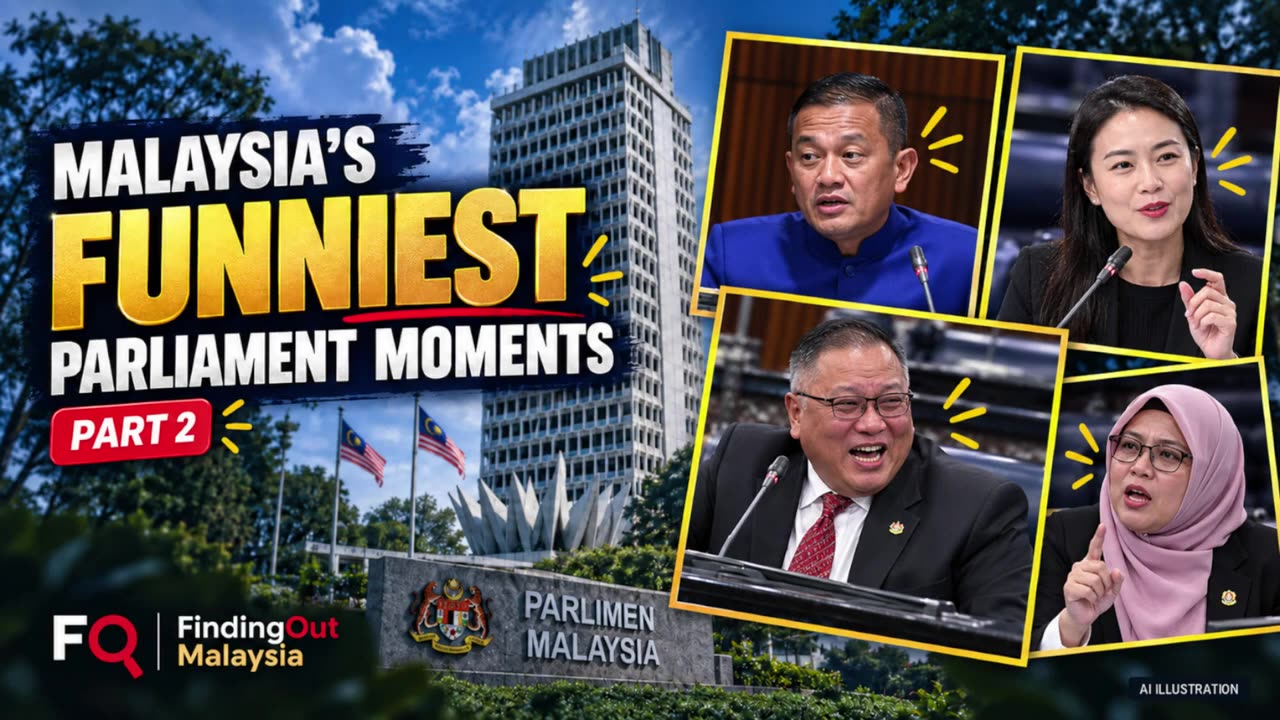
    Watch Malaysia’s Funniest Parliament Moments — Part 1 above, then continue with Part 2 — Alice Lau, a royal one-liner and Tiong King Sing, available in English, Malay, Mandarin and Tamil.

    Sources & Editorial Note

    The parliamentary moments featured on this page are based on publicly available recordings and records of Dewan Rakyat proceedings.

    Key sources:
    Moment 1: Parliament of Malaysia — Dewan Rakyat proceedings and Hansard, 13 March 2024.
    Moment 2: Berita RTM — Parliament afternoon sitting, 20 August 2025; additional close-up footage from The Star.
    Moment 3: Dewan Rakyat sitting, 9 November 2020; published video reference from World of Buzz.

    Source material includes Parliament of Malaysia recordings and Hansard, Berita RTM, The Star, and published footage relating to the respective incidents.

    Short excerpts are presented for commentary, review, historical context and public-interest discussion. Copyright in the original third-party footage remains with the respective owners and broadcasters.

    The description of these incidents as “funniest” is a subjective editorial opinion and is intended as light-hearted commentary. FindingOut Malaysia does not intend to allege misconduct, illegality or wrongdoing by any person appearing in the material.

    Some promotional graphic cards contain AI-generated or digitally created illustrative imagery and should not be interpreted as documentary photographs of the incidents.

    Watch Part 1 in other languages

    The same three Parliament moments are now available in Malay, Mandarin and Tamil. Choose your preferred version below.

    Malay version

    Watch the Malay version on YouTube

    Mandarin version

    Watch the Mandarin version on YouTube

    Tamil version

    Watch the Tamil version on YouTube

    Watch next

    Enjoy looking a little deeper? Subscribe to FindingOut Malaysia on YouTube for new videos.