Malaysia can look deeply troubled from the headlines.
Political controversy, concerns about governance, rising living costs and pressure on household budgets can easily create the impression that the country is moving in the wrong direction.
On 27 August 2026, three former Malaysian prime ministers — Najib Razak, Muhyiddin Yassin and Ismail Sabri Yaakob — appeared at the same court complex in Kuala Lumpur on the same day for three separate and unrelated proceedings.
To some, that image may represent everything that has gone wrong with Malaysian politics. To others, it may suggest that even former national leaders remain answerable to institutions and the courts.
Either way, it raises a bigger question:
Are we looking at Malaysia too narrowly?

Look Beyond the Headlines
Malaysia has advantages that are easy to overlook.
It sits beside the Strait of Malacca, between the Indian Ocean and the major economies of East Asia. It has major ports, established manufacturing, natural resources, energy infrastructure and strong trading links with the wider world.
Malaysia is also comparatively fortunate geographically. While neighbouring Indonesia and the Philippines face some of the world’s most active earthquake and volcanic zones, much of Malaysia lies outside the most intense parts of the Pacific Ring of Fire.
Its multicultural population and widespread use of Bahasa Malaysia and English also help the country connect across different markets and cultures.
The Numbers Tell Another Story
Malaysia’s economy has continued to grow.
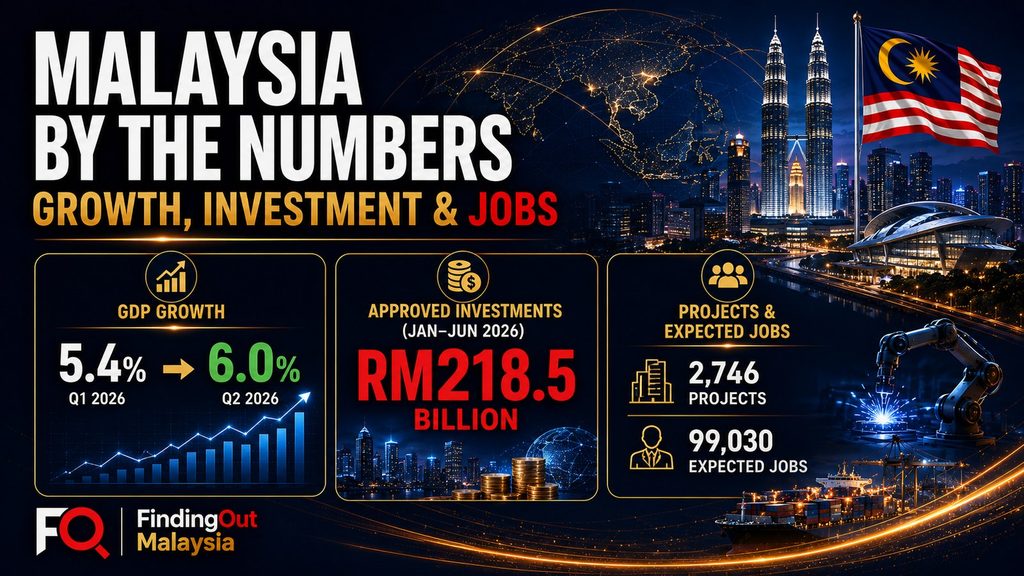
GDP growth strengthened from 5.4% year-on-year in Q1 2026 to 6.0% in Q2 2026.
In the first half of 2026, RM218.5 billion in investments were approved across 2,746 projects, with approximately 99,030 jobs expected. Investment is also moving into electronics, semiconductors, renewable energy, battery storage, data centres and digital infrastructure.
Approved investment is not the same as money already spent, and projected jobs are not jobs already created. But the direction matters.
Serious capital has not written Malaysia off.
So Why Does Life Still Feel So Expensive?
This is where the story becomes more complicated.
Economic growth can look healthy while ordinary households still feel under pressure.
People experience the economy through rent, groceries, transport, petrol and monthly bills — not GDP percentages.
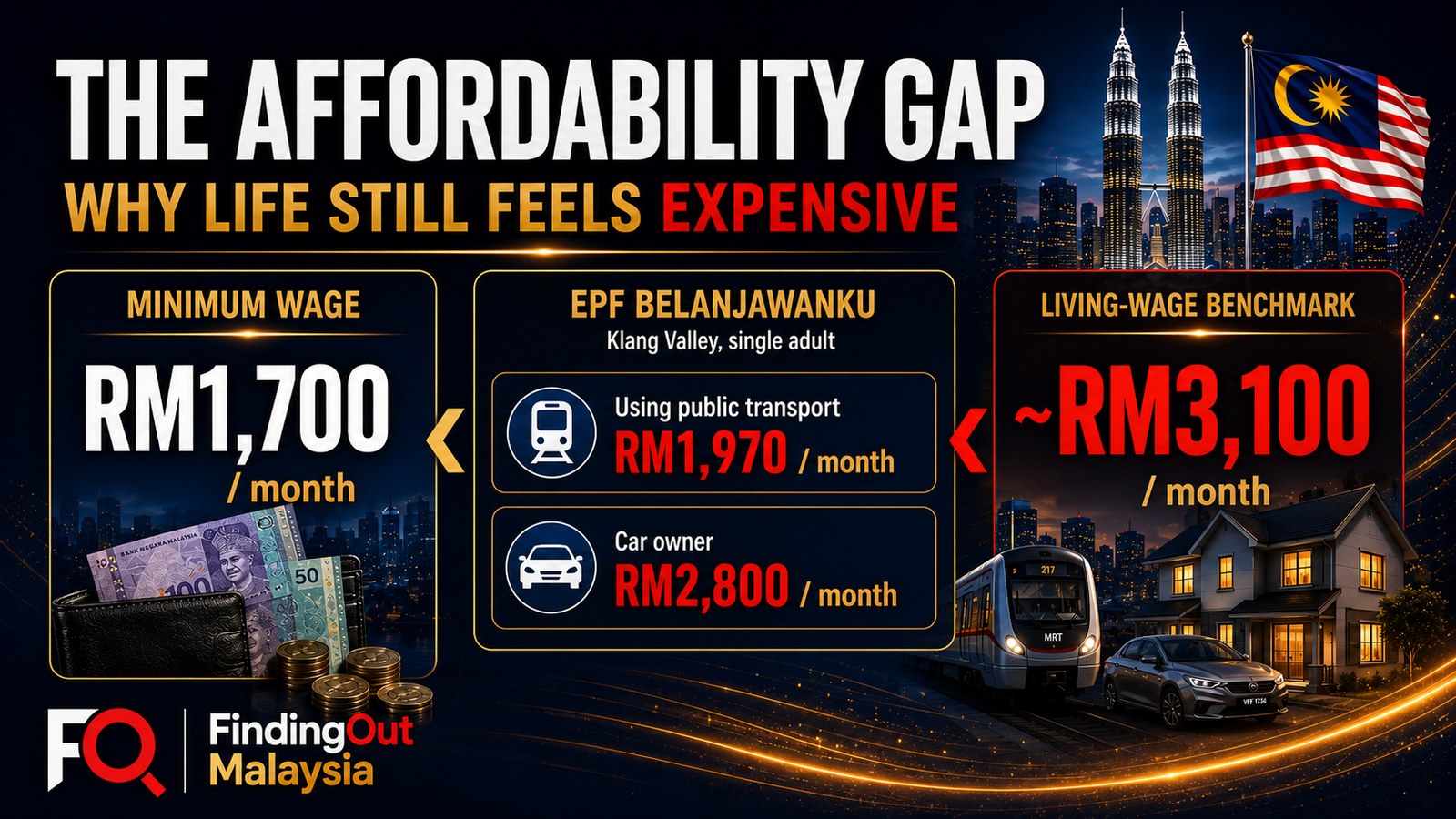
Malaysia’s minimum wage is RM1,700 per month. EPF’s Belanjawanku estimates suggest that a single adult in the Klang Valley may need around RM1,970 per month using public transport, with substantially more required for a car owner.
That helps explain why positive economic statistics do not always feel like prosperity.
The challenge is not simply to make the economy bigger. It is to turn growth into better jobs, stronger wages and higher household prosperity.
Malaysia’s Story Isn’t Finished
Malaysia was not dealt a bad hand.
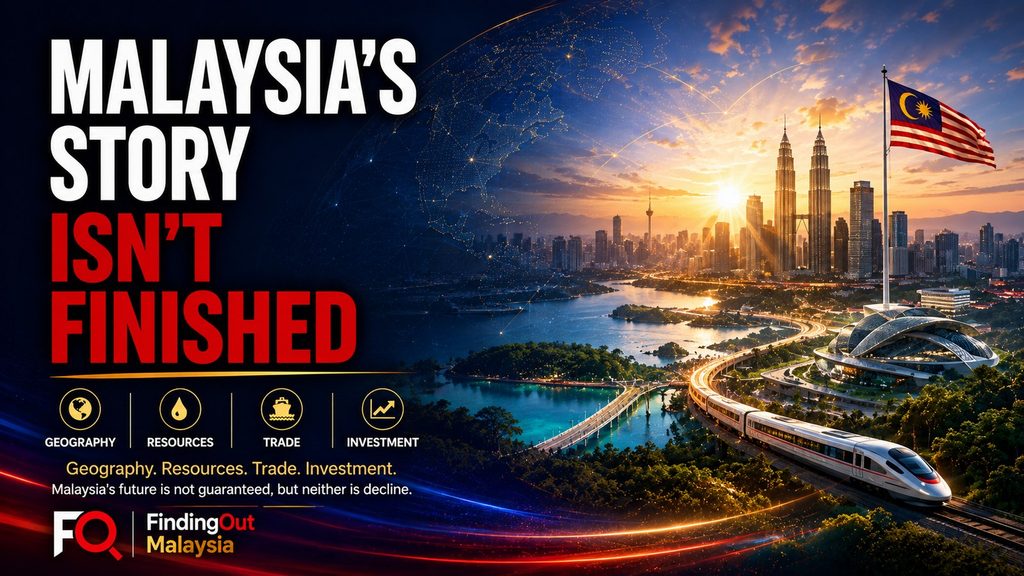
Geography helped. Resources helped. Trade helped. Investors are still willing to put money into its future.
But no advantage guarantees success.
What matters is how well Malaysia develops its people, raises productivity, executes effectively and turns opportunity into better lives.
Malaysia’s future is not guaranteed. But neither is decline.
Perhaps Malaysia is not finished.
Perhaps Malaysia simply has not finished becoming what it could be.
Want the Full Story?
Watch “What If Everyone Is Wrong About Malaysia?” on FindingOut Malaysia on YouTube.
https://www.youtube.com/@FindingoutMalaysia
An illustrated 13-page PDF summary is also available for download.
Website: findingout.com