Tag: FindingOut Malaysia

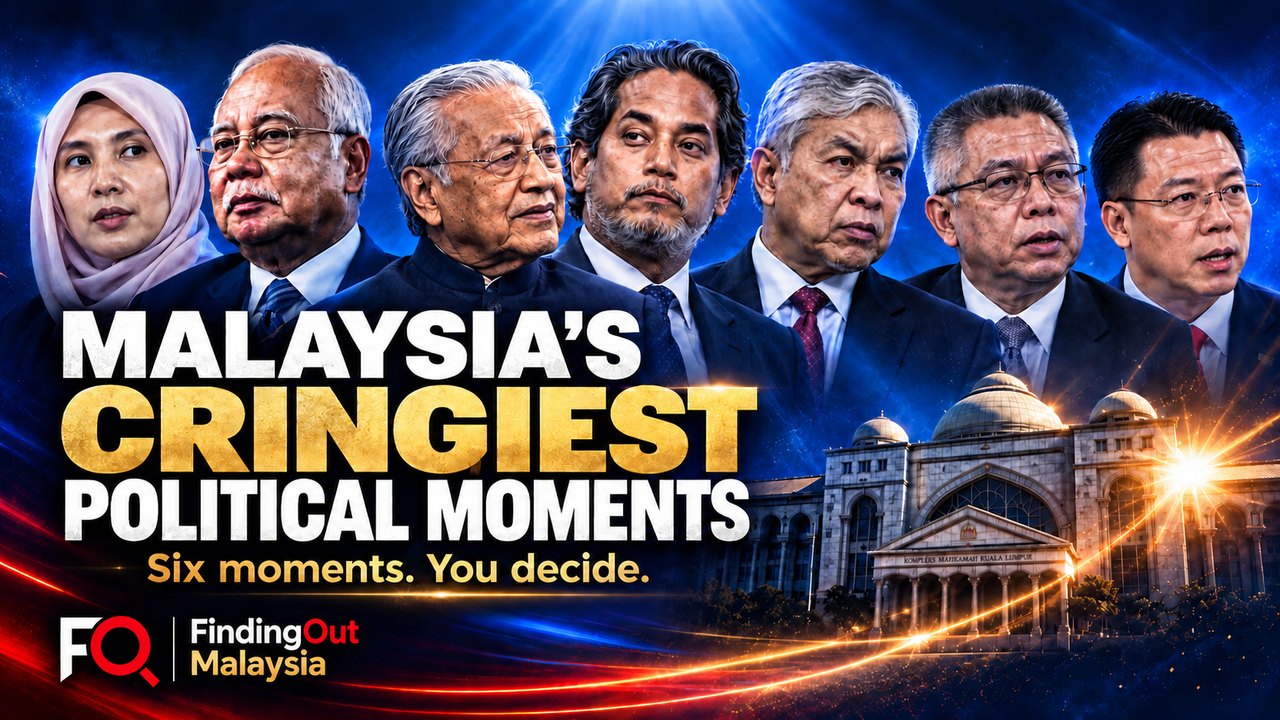
  • Malaysia’s Cringiest Political Moments — Part 4: Najib, Azalina & Adham Baba

    Malaysia’s Cringiest Political Moments — Part 4: Najib, Azalina & Adham Baba

    English narration · English subtitles during spoken sections · About 2 minutes

    This is the English version. Watch in Malay (Bahasa Malaysia) or Mandarin(华语版).

    One troublesome word, an unexpected question about a neckline, and a pandemic name that came out wrong. Part 4 of FindingOut Malaysia’s Cringiest Political Moments brings together Najib Razak, Azalina Othman Said and Dr Adham Baba in three very different public settings.

    These are archived moments from 2014, 2025 and 2021. Roles and titles refer to the time of each recording. Watch the compilation above, or explore the stories behind the clips below.

    MOMENT 1 · 27 APRIL 2014

    Najib: one tricky word

    A serious answer meets a word that refuses to cooperate.
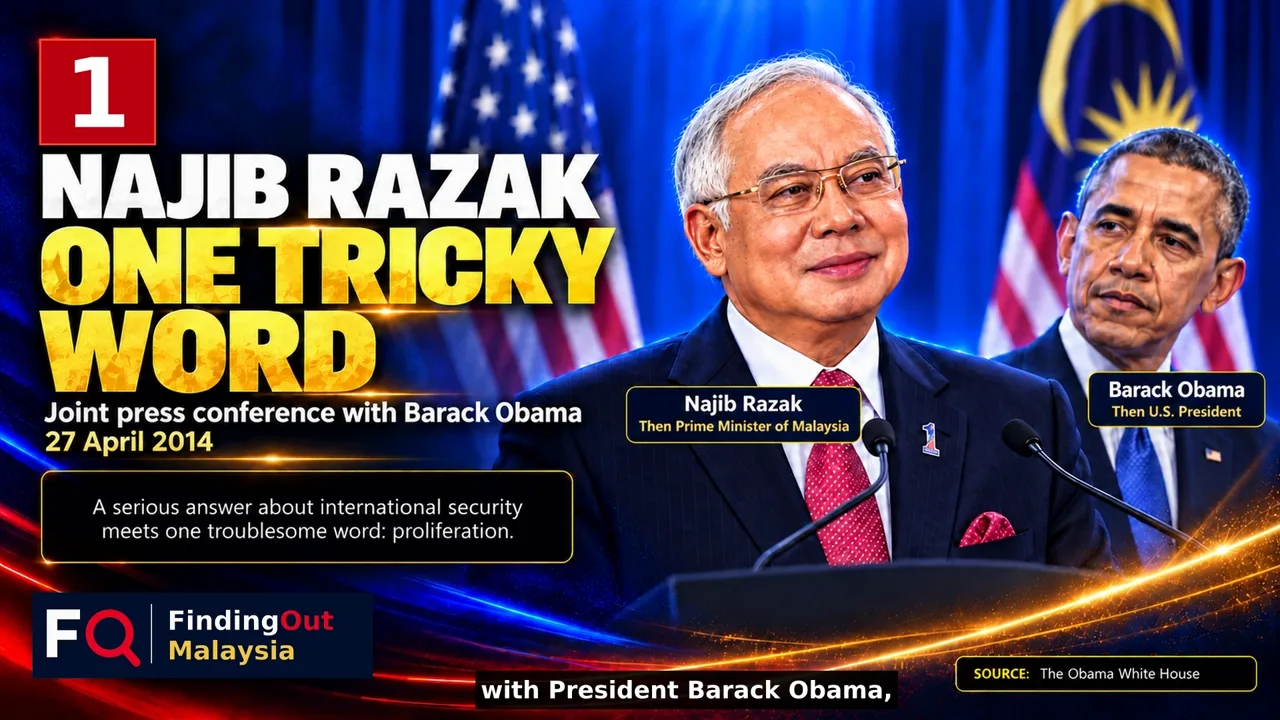
    Najib Razak and Barack Obama — One Tricky Word
    Graphic card extracted from the video · AI-assisted illustration.

    At a joint press conference with President Barack Obama, then-prime minister Najib Razak was answering a question about Malaysia’s cooperation on international security. The subject was preventing the spread of nuclear-weapons components and weapons of mass destruction. In the middle of that serious answer, he stumbled over proliferation.

    The word means an increase or spread; in this setting, it referred to weapons and related materials. Obama responded with a light-hearted reassurance, and the room laughed before the discussion continued. That response is part of the charm of the clip: an awkward second becomes a shared human moment. The full transcript also keeps the stumble in perspective, alongside the substantive security discussion.

    Watch from 00:10 · Read the official White House transcript

    MOMENT 2 · 25 AUGUST 2025

    Azalina & Rosol: the collar question

    A legal-aid debate takes an unexpected turn towards clothing.
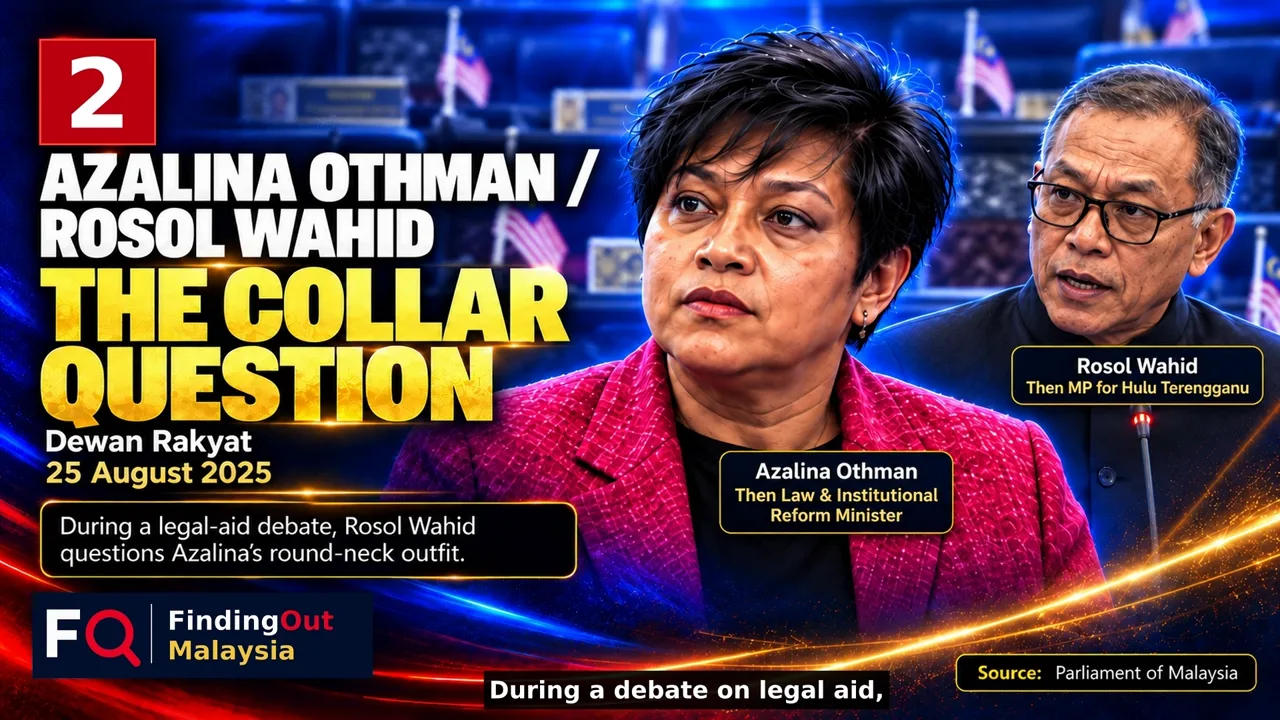
    Azalina Othman and Rosol Wahid — The Collar Question
    Graphic card extracted from the video · AI-assisted illustration.

    During the Dewan Rakyat debate on the Legal Aid and Public Defence Bill, Rosol Wahid raised a question about Azalina Othman Said’s round-neck outfit. What had been a discussion of legislation briefly became an exchange about the chamber’s dress rules. Azalina replied that her outfit did have a collar, even if he could not see it.

    Her response and the ensuing banter drew laughter in the chamber. But an important detail should travel with the joke: Deputy Speaker Alice Lau said she did not see a problem with the attire. The clip therefore should not be read as a finding that Azalina broke the dress code. It is a moment of parliamentary repartee, with the wider debate waiting to resume.

    Watch from 00:45 · Read the contemporary report · Watch KiniTV’s excerpt

    MOMENT 3 · APRIL 2021

    Dr Adham Baba: “Spanish fly”

    Remembering a pandemic — and stumbling over its name.
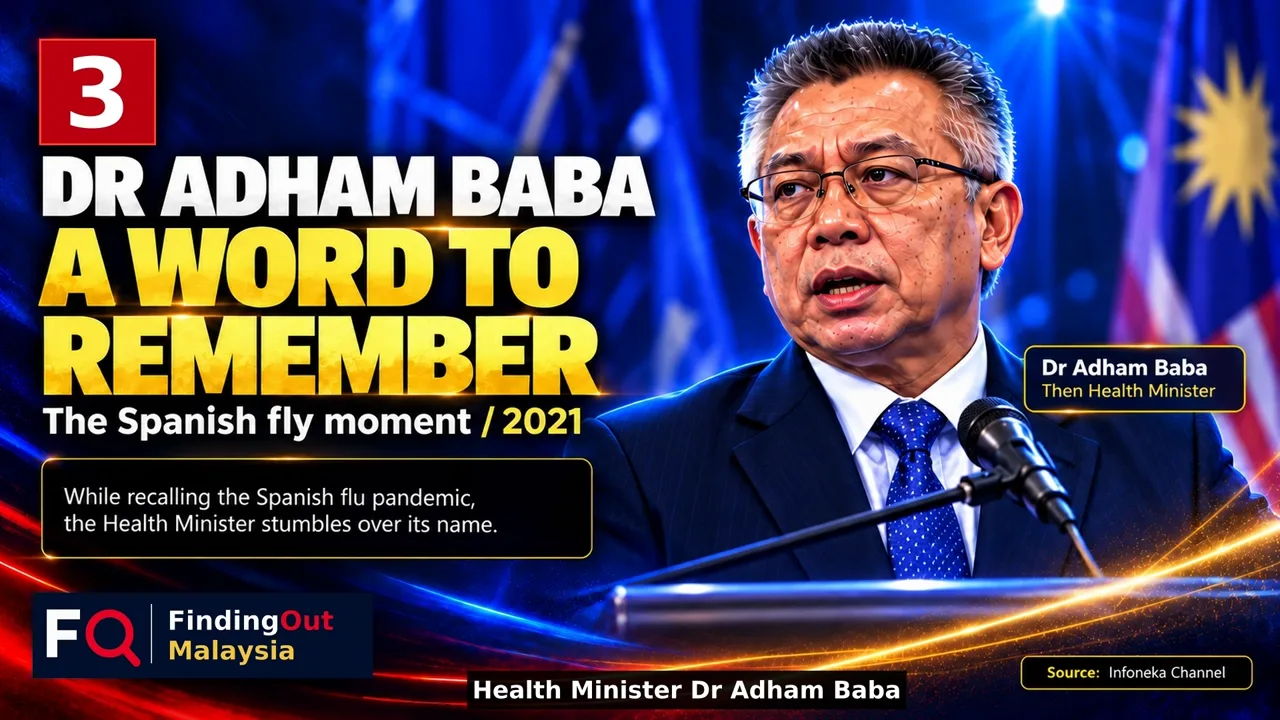
    Dr Adham Baba — A Word to Remember
    Graphic card extracted from the video · AI-assisted illustration.

    While discussing the pandemic at a book launch at Universiti Putra Malaysia, then-health minister Dr Adham Baba referred to the Spanish flu as “Spanish fly”, before trying to correct himself. The Vibes dates the speech to 2 April 2021; the clip attracted wider attention when it circulated in July that year.

    The similarity of the two phrases explains the wordplay, but the historical facts need separating from what was said. The Spanish flu pandemic began in 1918. The CDC estimates that around 500 million people were infected and at least 50 million died worldwide. The dates and figures heard in the archival excerpt are reproduced as spoken, not offered as reliable statistics. This chapter pairs the verbal slip with that context, rather than allowing the error to become the takeaway.

    Watch from 01:20 · Read the event background · CDC: the 1918 influenza pandemic

    Which moment made you cringe?

    The tricky word, the collar question or the pandemic-name slip? Each scene shows how an unscripted moment can become the part of a public appearance that people remember. Watch the complete compilation on YouTube.

    About this compilation

    “Cringiest” is an editorial description. These historical clips are shortened for commentary and humour; the linked recordings and reports provide fuller context. A brief verbal stumble is not a comprehensive assessment of anyone’s work or abilities. English subtitles are editorial transcriptions or translations. AI-assisted portraits and graphic cards, and AI-generated English narration, are presentation elements distinct from the archival footage.

    Music: “Newsreel” by Max Surla / Media Right Productions, from the YouTube Audio Library. Third-party footage and music remain the property of their respective rights holders; attribution does not imply endorsement.

    Watch in Malay (Bahasa Malaysia)

    Prefer Malay? Watch Part 4 with Malay narration below.

    Watch the Malay version on YouTube

    Watch in Mandarin(华语版)

    马来西亚政坛最尴尬时刻 — 第4部(华语版)

    一个难念的词、一个关于衣领的问题,还有一句“Spanish fly”口误。本集回顾纳吉与奥巴马的联合记者会、阿莎丽娜与罗索华希的国会交锋,以及阿汉峇峇医生谈论西班牙流感时的口误。

    华语旁白 · 内嵌英文字幕 · 可选简体中文字幕 · 片长约2分13秒

    在YouTube观看华语版、参与测验及留言

    点击播放器的CC或设置,选择“中文(简体)”即可开启中文字幕;画面中的英文字幕会保留。字幕位置及显示效果可能因设备和播放器设置而异。

    来源与背景

    说明与制作披露

    本片回顾2014、2025及2021年的历史事件,并非即时新闻;“最尴尬”属于编辑观点。历史影像为评论与幽默呈现而节选,不代表完整发言。短暂口误不等于对任何人工作或能力的全面评价。

    阿汉峇峇片段的年份和数字按原话保留,包括其中的错误,并非本频道认可的事实或当前统计。西班牙流感大流行始于1918年,参见CDC历史资料。“Spanish fly”并非流感;其涉及的斑蝥素有毒,误食可能致命,参见National Capital Poison Center资料。本片仅作词义及背景解释。

    华语旁白及字幕力求忠实传达原意,准确措辞和语气以原始发言为准。漫画图卡由AI辅助制作,华语旁白为AI生成;事件片段保留历史影像及原始发言声音。音乐:“Newsreel” — Max Surla / Media Right Productions,来源为YouTube Audio Library。第三方影像及音乐的权利归各自权利人所有,列明来源不表示获得其背书或授权。

    Watch next

    Explore more videos from FindingOut Malaysia.

  • Malaysia’s Cringiest Political Moments — Part 3: “Taliban”, Abah & Vaping

    Malaysia’s Cringiest Political Moments — Part 3: “Taliban”, Abah & Vaping

    English narration · English subtitles during spoken sections · About 2 minutes

    This is the English version. Watch in Malay (Bahasa Malaysia) or Mandarin(华语版).

    A parliamentary exchange that escalated, a fatherly warning during the pandemic, and a quiet puff that led to a public apology. Part 3 of FindingOut Malaysia’s Cringiest Political Moments brings together three moments from 2019–2020, with the background that helps explain why they became memorable.

    These are historical clips, not new events. The titles and positions mentioned below refer to the time of each recording. Watch the compilation above, or explore each moment below.

    Moment 1 · 28 March 2019

    Khairy & Nga: the “Taliban” exchange

    A question, a sharp response, and a word that had to be withdrawn.

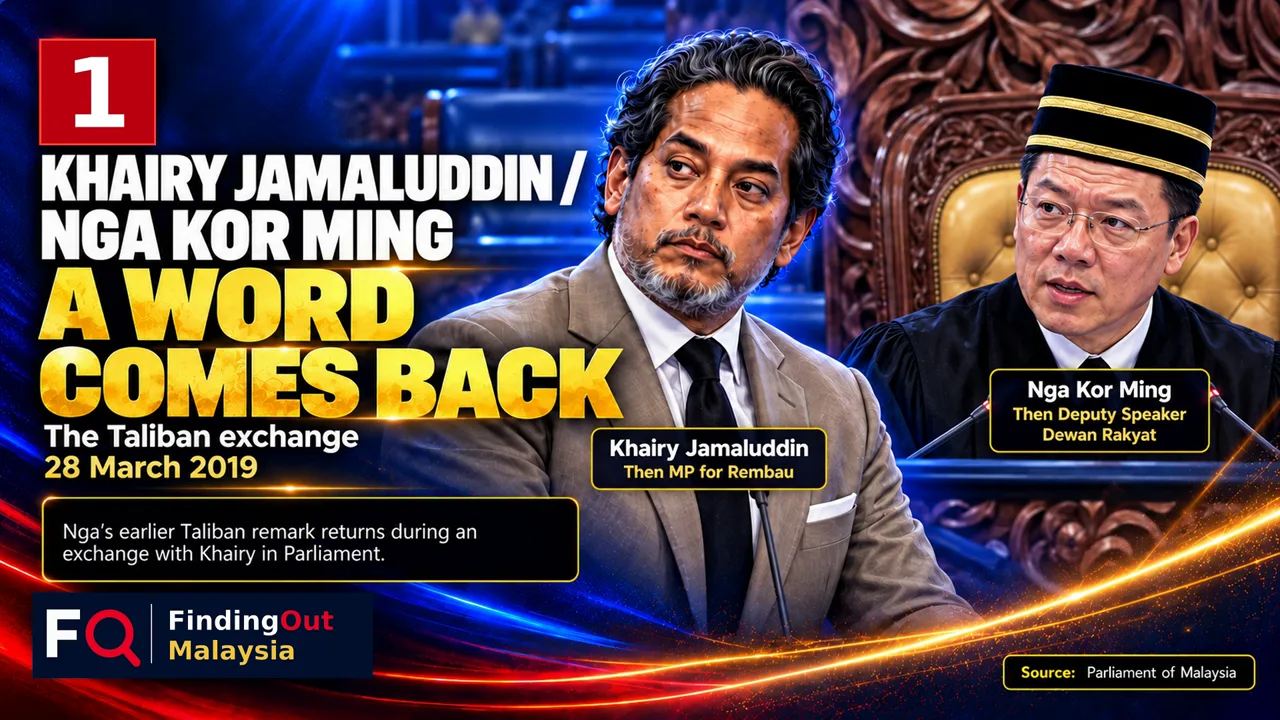
    Khairy Jamaluddin and Nga Kor Ming — A Word Comes Back, graphic card from Part 3
    Original graphic card from the video · AI-assisted illustration.

    In the Dewan Rakyat, Khairy Jamaluddin was questioning the government about the Cost of Living Aid programme when an exchange with Deputy Speaker Nga Kor Ming became personal. The argument moved from the substance of the question to whether it had been understood, and Khairy used the word “Taliban” in addressing Nga.

    The compilation includes Khairy’s withdrawal, which matters when watching a short excerpt of a longer parliamentary sitting. The quoted label belongs to that exchange; FindingOut is not suggesting any affiliation. The moment illustrates how quickly political disagreement can turn into an argument over language and conduct.

    Watch from 00:10 · Contemporary reporting and context

    Moment 2 · 6 October 2020

    Muhyiddin: Abah and the rotan

    When a national address took on the tone of a family warning.

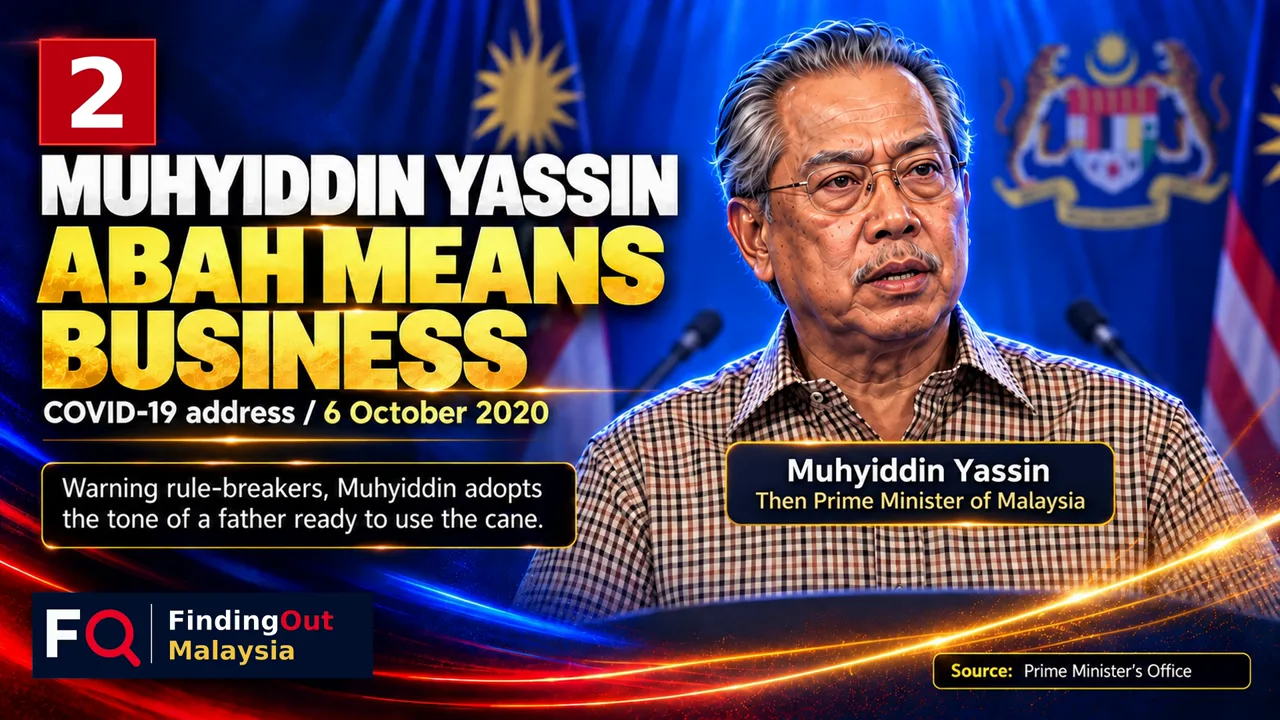
    Muhyiddin Yassin — Abah Means Business, graphic card from Part 3
    Original graphic card from the video · AI-assisted illustration.

    During a special address about the COVID-19 situation, then-prime minister Muhyiddin Yassin urged the public to follow the rules. His warning drew on a familiar family image: Abah means Dad or father, while rotan means cane. For viewers unfamiliar with Malay, those two words explain the paternal tone of the passage.

    The clip sits within a much longer speech about rising cases, public cooperation and enforcement. Seen in that setting, the memorable line is part of an appeal for compliance during a serious public-health crisis. The contrast between the national setting and the language of parental discipline gives this chapter its distinctive character.

    Watch from 01:04 · Read the official speech, including paragraph 46

    Moment 3 · August 2020

    Hishammuddin: a quiet puff—and an apology

    A background action became the story. The follow-up belongs in it too.

    Hishammuddin Hussein — A Quiet Puff, graphic card from Part 3
    Original graphic card from the video · AI-assisted illustration.

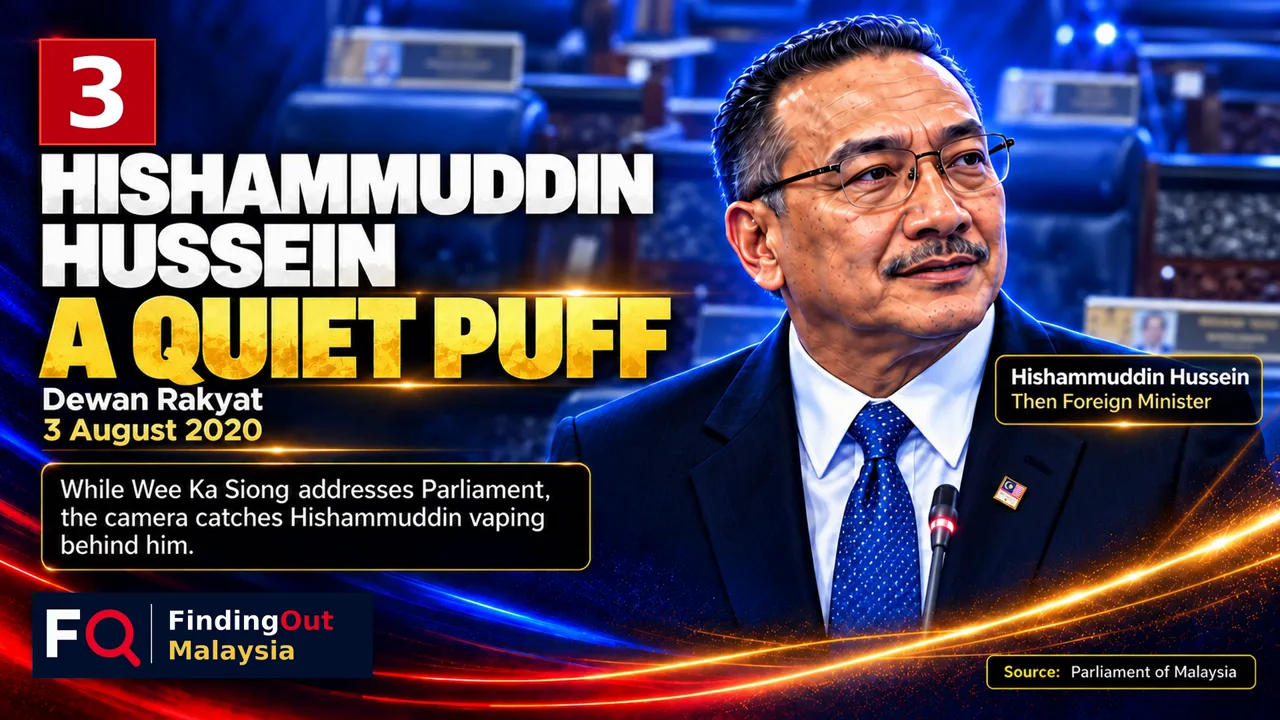
    Hishammuddin Hussein’s vaping moment during the parliamentary sitting on 3 August 2020 attracted attention beyond the debate itself. This chapter follows the incident with his parliamentary apology on 10 August, rather than ending with the brief clip that first drew attention.

    In the apology, he said that he had paid the fine, without stating its amount. RM250 is the amount reported separately in news coverage; it should not be confused with an amount spoken in the apology itself. Including the response gives viewers a fuller account of what happened after the moment went viral.

    Watch from 01:30 · The apology at 01:49 · Contemporary report

    Which moment made you cringe?

    A heated exchange, a fatherly warning or the quiet puff: which stayed with you? Watch on YouTube and share your reaction.

    About this compilation

    “Cringiest” is an editorial description. The archival clips are shortened for commentary and humour; the linked sources provide fuller context. English subtitles are editorial translations. AI-assisted portraits and graphic cards, and AI-generated English narration, are presentation elements; they are distinct from the archival event footage. Brief picture repairs in the video address defective frames without changing the original speech.

    Music: “Newsreel” by Max Surla / Media Right Productions, from the YouTube Audio Library. Third-party footage and music remain the property of their respective rights holders; attribution does not imply endorsement.

    Watch in Malay (Bahasa Malaysia)

    Prefer Malay? Watch Part 3 with Malay narration below.

    Watch the Malay version on YouTube

    Watch in Mandarin(华语版)

    马来西亚政坛最尴尬时刻 — 第3部(华语版)

    一场围绕“塔利班”一词的国会交锋、一番“阿爸与藤条”的提醒,以及一次引来道歉的电子烟风波。本集回顾凯里与倪可敏的交锋、慕尤丁的“Abah”讲话,以及希山慕丁在国会吸电子烟后的道歉。

    华语旁白 · 内嵌英文字幕 · 可选简体中文字幕 · 片长约2分32秒

    在YouTube观看华语版、参与测验及留言

    点击播放器的CC或设置,选择“中文(简体)”即可开启中文字幕;画面中的英文字幕会保留。字幕位置及显示效果可能因设备和播放器设置而异。

    来源与背景

    说明与制作披露

    本片回顾历史事件,并非即时新闻;“最尴尬”属于编辑观点。历史影像为评论与幽默呈现而节选,不代表完整发言,请参阅原始资料了解上下文。华语旁白及字幕力求忠实传达原意,准确措辞和语气以原始发言为准。

    漫画图卡由AI辅助制作,华语旁白为AI生成;事件片段保留历史影像及原始发言声音。音乐:“Newsreel” — Max Surla / Media Right Productions,来源为YouTube Audio Library。第三方影像及音乐的权利归各自权利人所有,列明来源不表示获得其背书或授权。
    Watch next

    Explore more videos from FindingOut Malaysia.

  • Malaysia vs Singapore: A Fishy Situation — Mal & Sing Comedy

    Malaysia vs Singapore: A Fishy Situation — Mal & Sing Comedy

    English · 2 minutes 28 seconds · English subtitles included

    This is the English version. Scroll down to watch the Mandarin version.

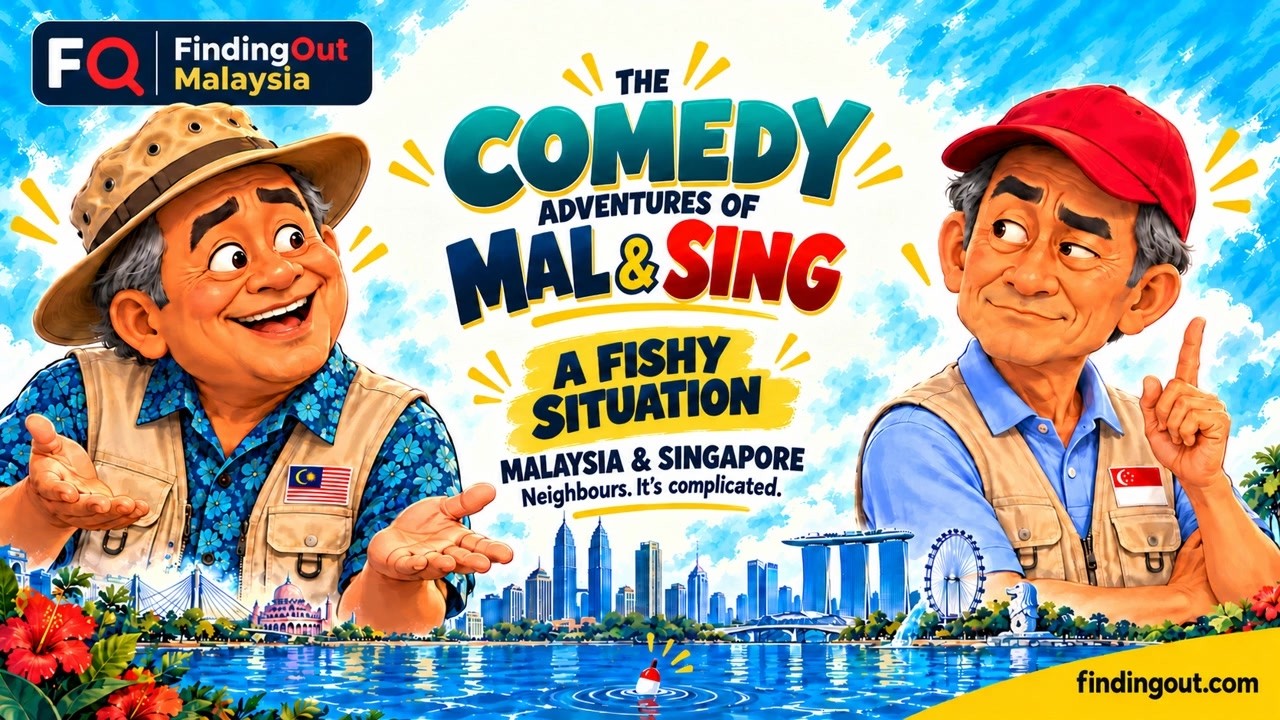
    Two neighbours. Two fishing rods. One very awkward lunch. Mal catches a mountain of fish. Sing brings a sandwich—and a few opinions. What starts as a quiet fishing trip becomes a contest of wit, bargaining and memories that are anything but cheap.

    Meet Mal & Sing

    A Fishy Situation introduces The Comedy Adventures of Mal & Sing, an animated comedy from FindingOut Malaysia. These two fictional leaders from Malaysia and Singapore turn friendly rivalry into a very personal negotiation over lunch. Their contrasting fortunes with a fishing rod are only the beginning.

    The humour draws on the familiarity of two neighbours who know exactly how to tease each other. A remark about fish leads to the Causeway, a bridge and a sandwich; before long, even a simple meal has acquired the atmosphere of a bilateral negotiation. Watch to see who gets the last laugh.

    From Fishing to Negotiating

    The story moves through three small battles: getting the fish to bite, deciding what is for lunch, and settling who owes whom. Mal has the catch, Sing has his own answer, and neither is short of a comeback. References to cash and high-speed rail give their banter a familiar regional flavour without turning the characters into portraits of real individuals.

    The final cards step outside the sketch to explain some of the historical references behind the jokes. For a fuller look at the relationship, read and watch Malaysia vs Singapore: A War Without Bullets?

    Behind the Joke: Three Graphic Cards

    These three cards from the video explain the historical references behind Mal and Sing’s banter.

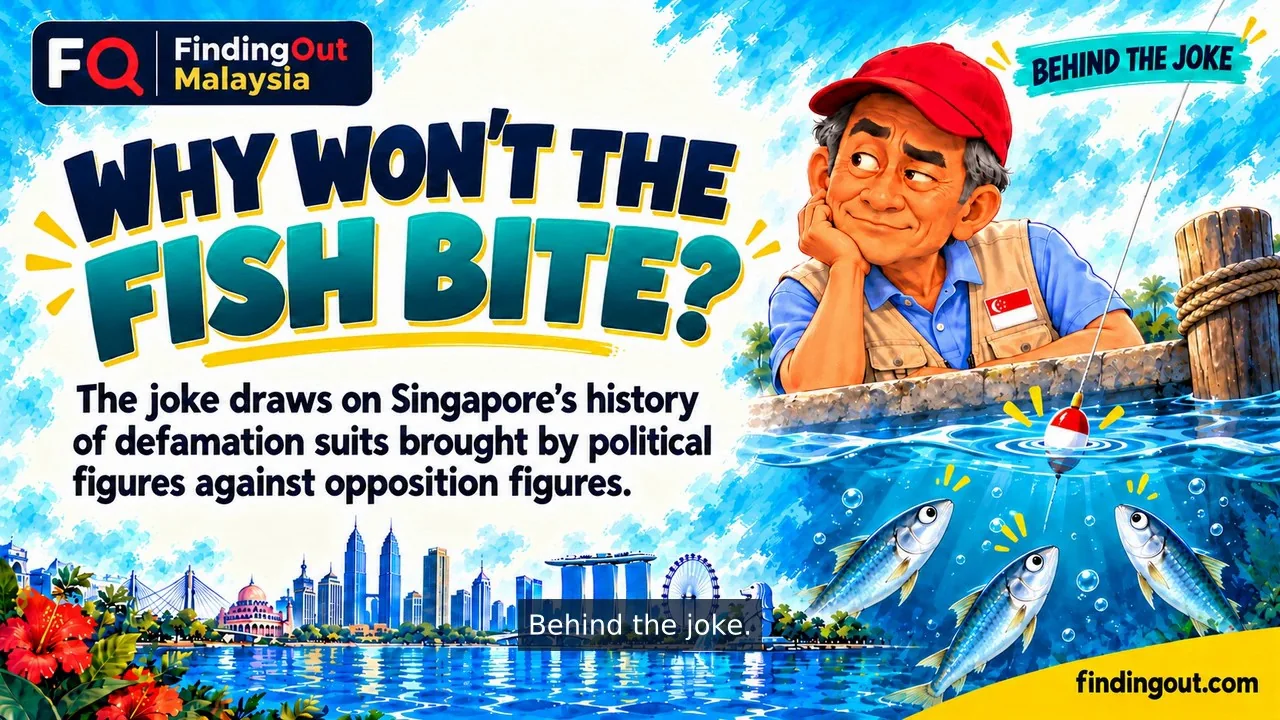
    1. Why won’t the fish bite?

    Behind the joke: Sing fishing, with an explanation of the political defamation reference

    The joke turns an unsuccessful fishing trip into a piece of political satire. Its background is Singapore’s history of defamation proceedings involving political figures and opposition politicians. One documented example is Lee Kuan Yew v Chee Soon Juan, a 2003 High Court judgment arising from statements made during the 2001 election campaign. The fishing exchange itself is invented; the card explains the reference behind the punchline rather than reporting a real conversation.

    Background: Singapore High Court judgment, [2003] SGHC 78.

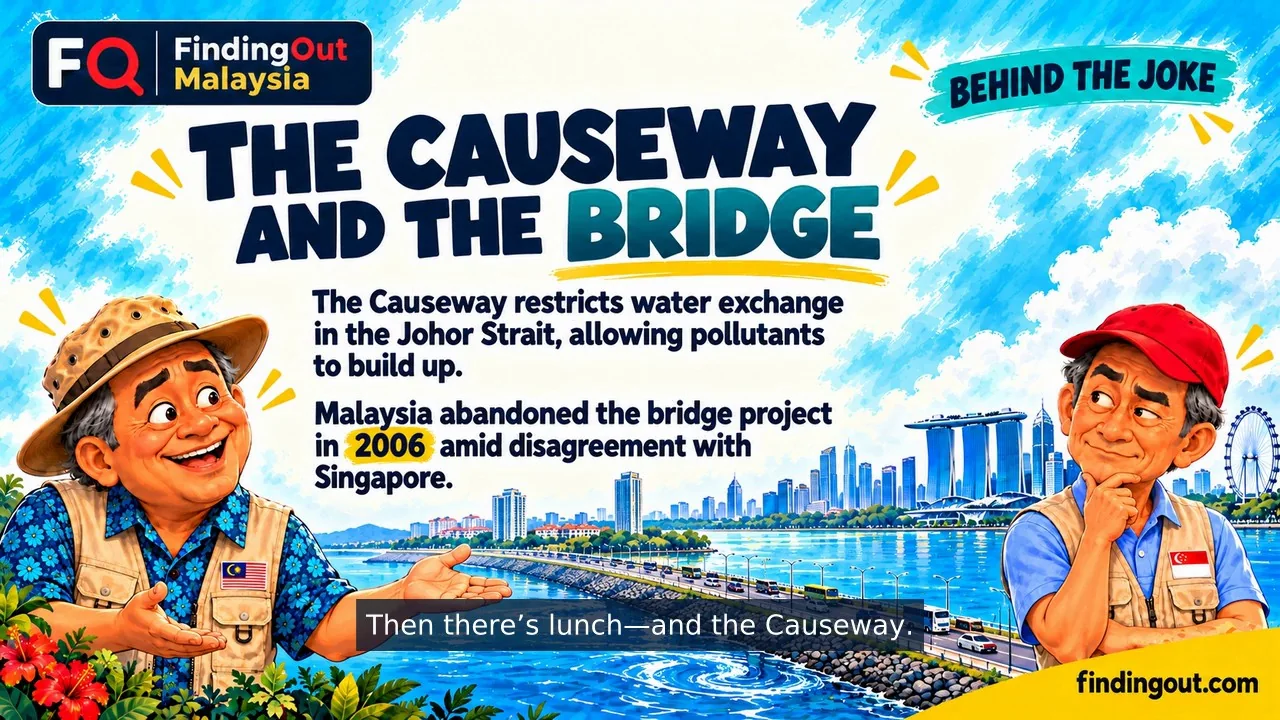
    2. The Causeway and the bridge

    Behind the joke: Mal and Sing explain the Johor Causeway and the bridge proposal

    The banter about fish and lunch also points to the physical connection between the two neighbours. The Causeway divides the Johor Strait into eastern and western sections, with limited water exchange between them. A 2024 study describes nutrient-rich waters affected by runoff and wastewater from the surrounding catchments. The joke compresses that environmental background into a quick exchange between two fishermen.

    The bridge reference recalls the disputed proposal to replace the Causeway, which Malaysia abandoned in 2006. It gives their friendly argument a second layer: even a conversation about lunch can bring back memories of a complicated bilateral negotiation.

    Background: Cheong and colleagues’ Johor Strait study and Malaysia’s Foreign Ministry statement on the bridge proposal.

    3. The HSR compensation

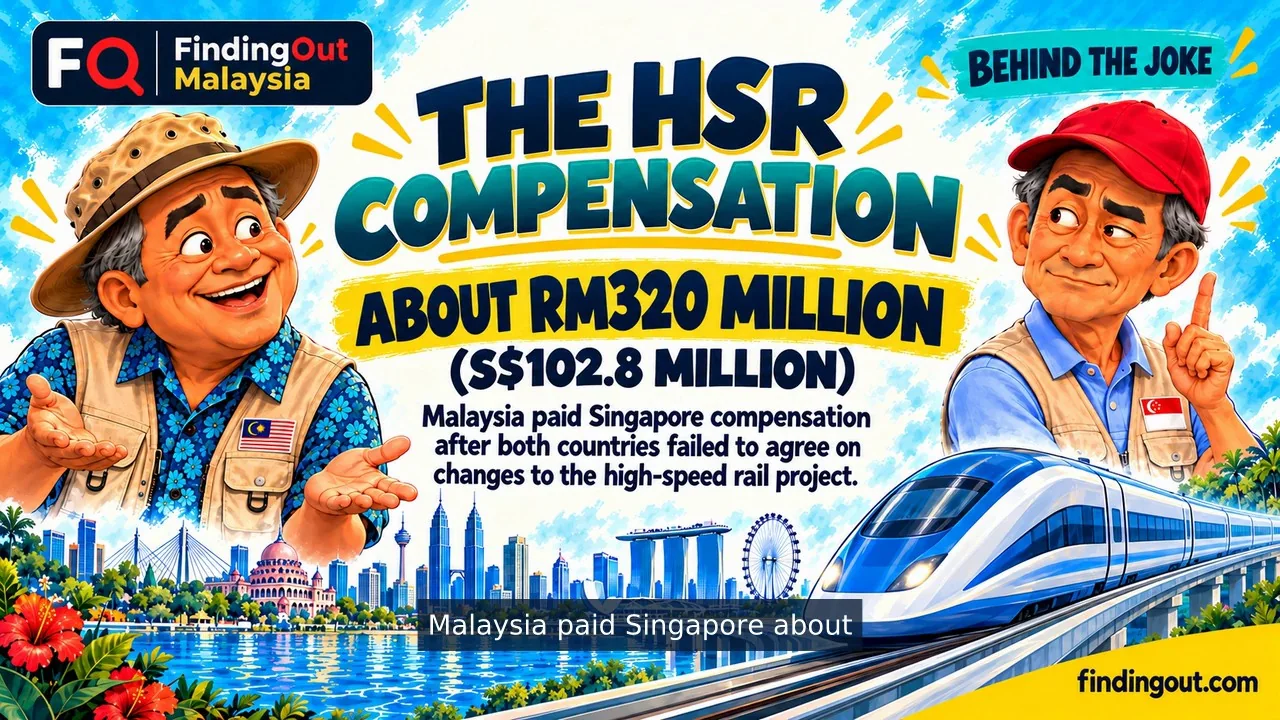
    Behind the joke: the 2021 high-speed rail settlement, approximately RM320 million or S$102.8 million

    The final card explains the expensive memory behind the cash and high-speed rail joke. Following the termination of the Kuala Lumpur–Singapore HSR bilateral agreement on 31 December 2020, Malaysia paid Singapore S$102,815,576, equivalent to RM320,270,519.24 in the joint settlement statement. The payment reimbursed development and suspension-related costs and was described as a full and final settlement.

    The video rounds those historical figures to about RM320 million and S$102.8 million. They refer to the 2021 settlement, not a present-day currency conversion. In the sketch, this serious financial history becomes another playful bargaining point between Mal and Sing.

    Source: joint settlement statement, 29 March 2021.

    Explore the Video

    Watch in Mandarin

    Enjoy A Fishy Situation with Mandarin narration and English subtitles. The same fishing trip, friendly rivalry and unexpected lunch negotiations—now in Mandarin.

    Mandarin · English subtitles included · Watch on YouTube

    A Note on the Comedy

    Mal and Sing are fictional composite characters created for political satire. Their dialogue, actions and personalities are invented or exaggerated for humour; they are not authentic quotations or factual portrayals of any particular person. No government, political party or public figure is affiliated with or endorses this production.

    The film uses AI-generated artwork, animation, voices and music, with concept adaptation, creative direction and production by FindingOut Malaysia. The fishing-joke premise is adapted from a previously heard joke. Historical references are explained separately in the closing cards. Full production credits and background sources are available in the YouTube description.

    Watch next

    Enjoy looking a little deeper? Subscribe to FindingOut Malaysia on YouTube for new videos.

  • Oops! Corporate Malaysia — AirAsia, iQIYI & Proton

    Oops! Corporate Malaysia — AirAsia, iQIYI & Proton

    English · 2 min 40 sec

    A blue aircraft. A letter that people read the wrong way. Two states in the wrong places on a map. This FindingOut video revisits three moments when a corporate message attracted attention for reasons its creators had probably not intended.

    AirAsia, iQIYI and Proton are familiar names in Malaysia. These stories happened in different years and circumstances, but each offers a small window into the relationship between brands, national identity and the public.

    AirAsia: when the red airline went blue

    Original FindingOut video graphic showing AirAsia’s blue aircraft and the 2018 general-election result.

    May 2018. During Malaysia’s 14th general election campaign, an AirAsia aircraft appeared in blue with the slogan “Hebatkan Negaraku”, associated with Barisan Nasional’s campaign. For a brand so closely identified with red, the change was hard to miss.

    After the election, Tony Fernandes apologised in a video released on 13 May. He said that political pressure had influenced his decisions and that he regretted his judgement. That explanation is his account of what happened. The episode is a reminder of how quickly a company’s public image can become entangled with politics. Read the contemporary report and his response.

    iQIYI: one letter, a very different reading

    Original FindingOut video graphic showing iQIYI’s stylised Anak Malaysia campaign lettering.

    September 2020. Streaming platform iQIYI’s Anak Malaysia campaign celebrated Malaysian and international films around Malaysia Day. The phrase means “child of Malaysia”, but the stylised letter K in its promotional design was easy to misread.

    Online jokes followed. iQIYI removed the poster, clarified the intended wording and apologised for the confusion, responding with humour of its own. It is a compact lesson in design: a word can be obvious to the team that created it and much less obvious to everyone seeing it for the first time. Read the report and iQIYI’s response.

    Proton: Sabah and Sarawak swap places

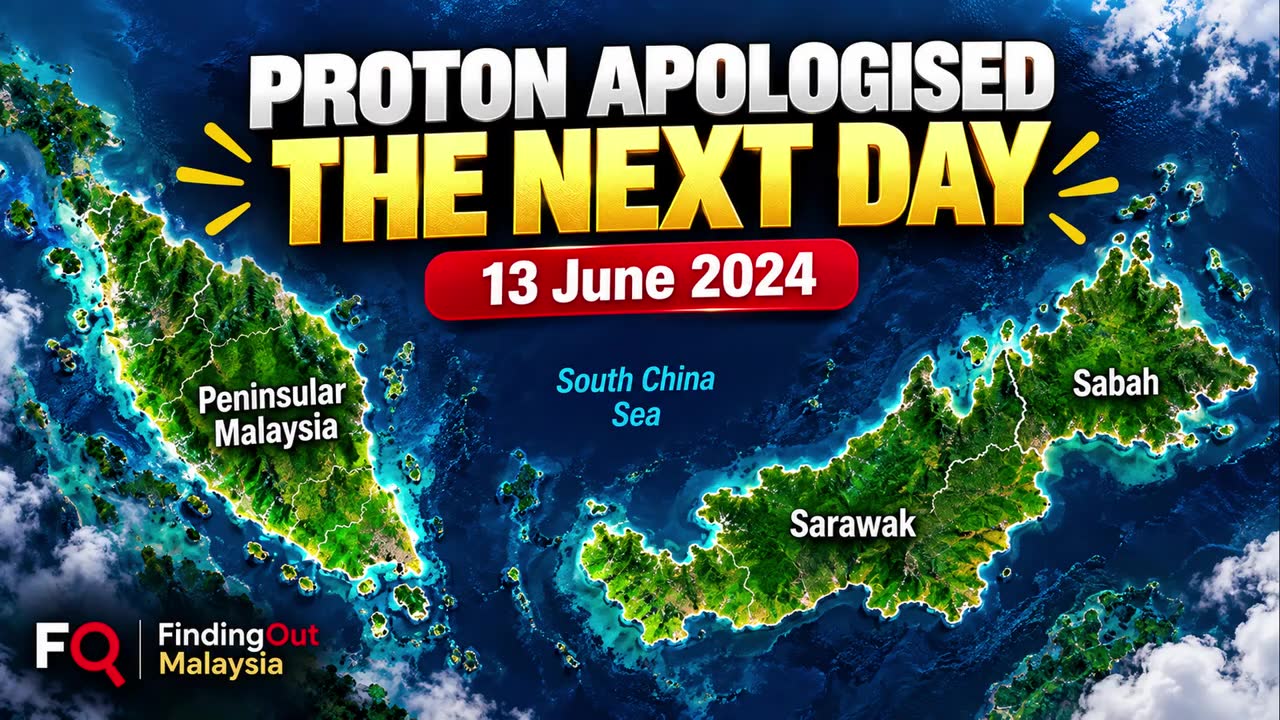
    Original FindingOut video graphic about Proton’s 13 June 2024 apology, with Sabah and Sarawak correctly labelled.

    June 2024. Proton unveiled its new electric-vehicle brand, e.MAS, on 12 June. During the presentation, the labels for Sabah and Sarawak were placed in each other’s positions on a map. Both states are in Malaysian Borneo, and the mistake quickly drew criticism.

    Proton apologised the following day, acknowledged the mislabelling and said it would take greater care. The incident occurred at the e.MAS brand unveiling; the video is revisiting that presentation, rather than reviewing the e.MAS 7 car. Proton’s original brand announcement and the report on its apology provide the background.

    Small details can become the whole story.
    A colour, a letter or a label may be a tiny part of a campaign. Once the public notices it, that detail can become the part everyone remembers.

    For another look at brands woven into daily Malaysian life, explore Three Super Apps That Run Malaysia.

    This is a light-hearted look back at reported events, not a current product review. The video uses AI narration and illustrative title cards alongside source material. Its description includes the full footage and image credits.

    Watch next

    Enjoy looking a little deeper? Subscribe to FindingOut Malaysia on YouTube for new videos.

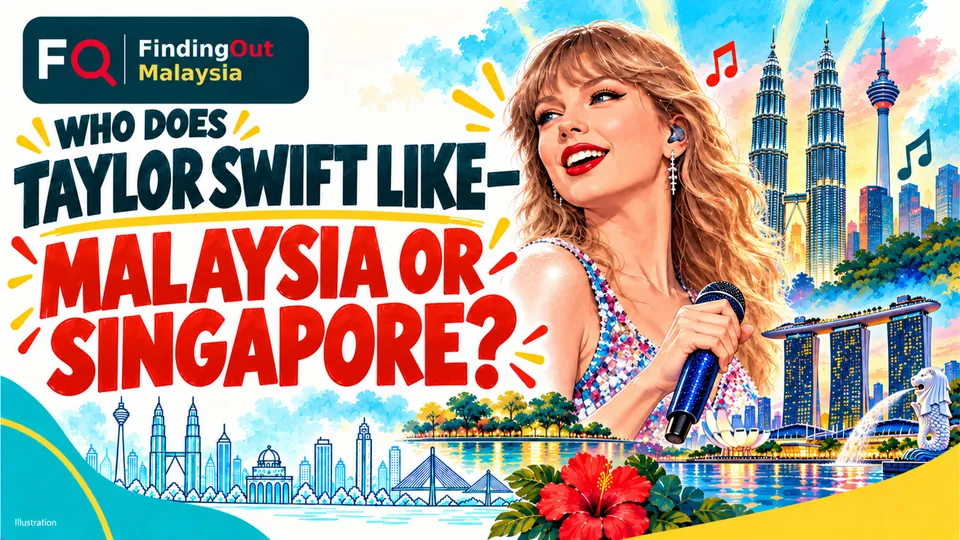
  • Who Does Taylor Swift Like — Malaysia or Singapore? The Swifties / Striptease Confusion!

    Who Does Taylor Swift Like — Malaysia or Singapore? The Swifties / Striptease Confusion!

    This is the English version. Watch the Mandarin or French version below ↓

    A funny exchange in Malaysia’s Parliament. A concert remembered in Kuala Lumpur. Six huge shows in Singapore. And a business story that reaches across the Causeway.

    Who does Taylor Swift like — Malaysia or Singapore? That playful question opens this FindingOut Malaysia film about the excitement, rivalry and economic pull surrounding a global superstar. From the “Swifties / striptease” confusion to Singapore’s exclusive concert arrangement, there is more here than a catchy headline.

    This is the refreshed English edition, with smoother narration, updated visuals and a revised edit. The original video remains available on our YouTube channel. Running time: approximately 2 minutes 11 seconds.

    “Swifties” or “Striptease”? A Moment in Parliament

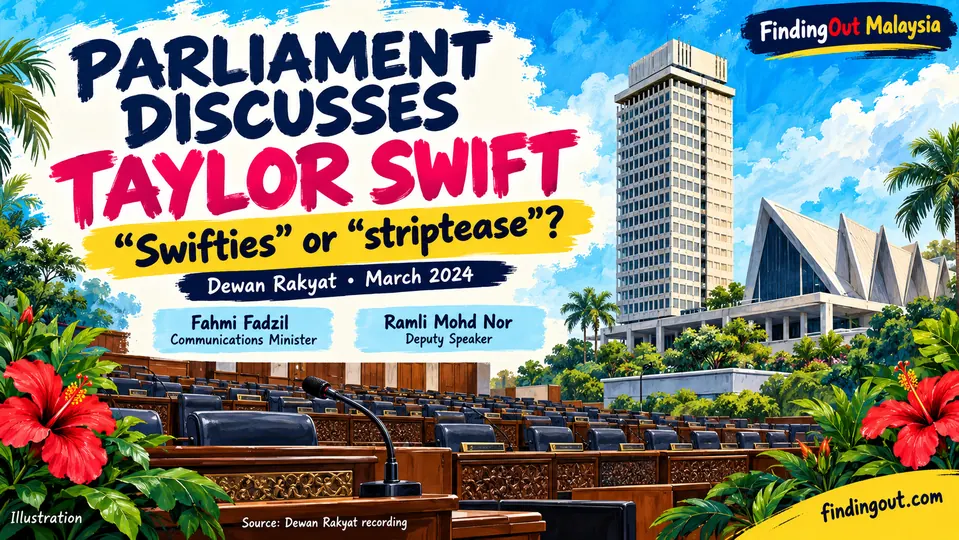
    Illustrated card about Fahmi Fadzil and Deputy Speaker Ramli Mohd Nor’s Swifties and striptease exchange in Malaysia’s Parliament on 13 March 2024
    An illustrated recap of the exchange in the Dewan Rakyat, 13 March 2024.

    “Swifties” is the familiar name for Taylor Swift’s fans. During a Dewan Rakyat exchange on 13 March 2024, Communications Minister Fahmi Fadzil referred to them, prompting Deputy Speaker Ramli Mohd Nor to respond with “Striptease?” Fahmi clarified that he meant Taylor Swift’s fans, and laughter followed. The exchange is recorded in the official parliamentary transcript, printed page 73.

    The film revisits that brief misunderstanding before turning to the larger question: why can a pop concert become a matter of national conversation?

    Malaysia Has Its Own Taylor Swift Memories

    Taylor Swift’s connection with Malaysia did not begin with the 2024 debate. She brought The RED Tour to Kuala Lumpur in June 2014. Concert sponsor AIA’s contemporary account describes a sold-out show at Putra Indoor Stadium, with nearly 8,000 people singing along. The refreshed film looks back at that visit and the enthusiasm of Malaysian fans. Read AIA’s concert account.

    Why Was Singapore the Only Southeast Asian Stop?

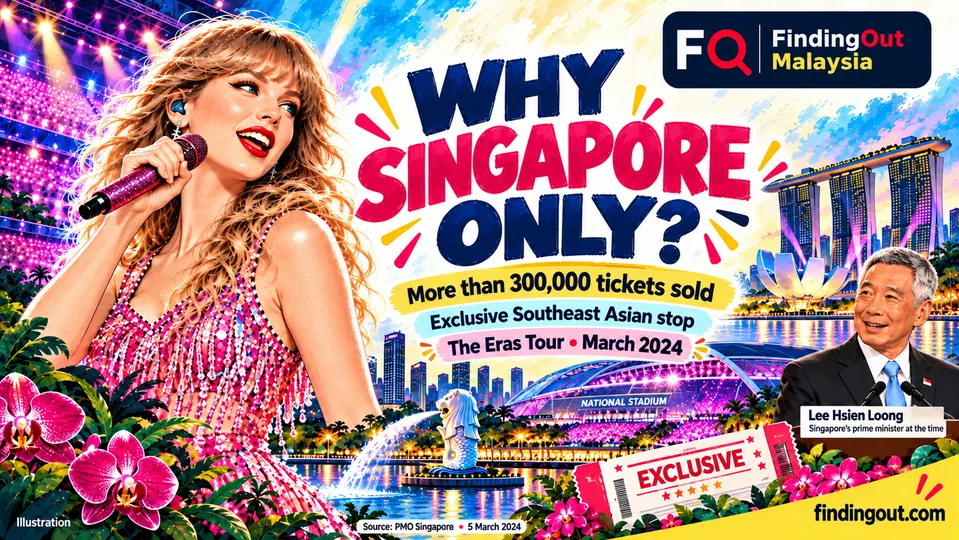
    Illustration of Taylor Swift’s six Singapore concerts in March 2024 and Lee Hsien Loong explaining the exclusive Southeast Asian arrangement
    Singapore’s exclusive Southeast Asian stop for the 2024 Eras Tour. Lee Hsien Loong was Singapore’s prime minister at the time.

    The Eras Tour played Singapore’s National Stadium on 2, 3, 4, 7, 8 and 9 March 2024. Singapore was the tour’s only Southeast Asian stop, as confirmed by official presenting partner Marina Bay Sands.

    At a press conference on 5 March 2024, then-prime minister Lee Hsien Loong explained that Singapore’s agencies had negotiated an arrangement supported by incentives from a post-pandemic tourism recovery fund. He described it as successful and did not regard it as unfriendly to neighbouring countries. That explanation is available in the official PMO transcript.

    The arrangement helps explain the tour itinerary. It does not establish which country Taylor Swift personally prefers.

    More Than Tickets: The Economic Pull

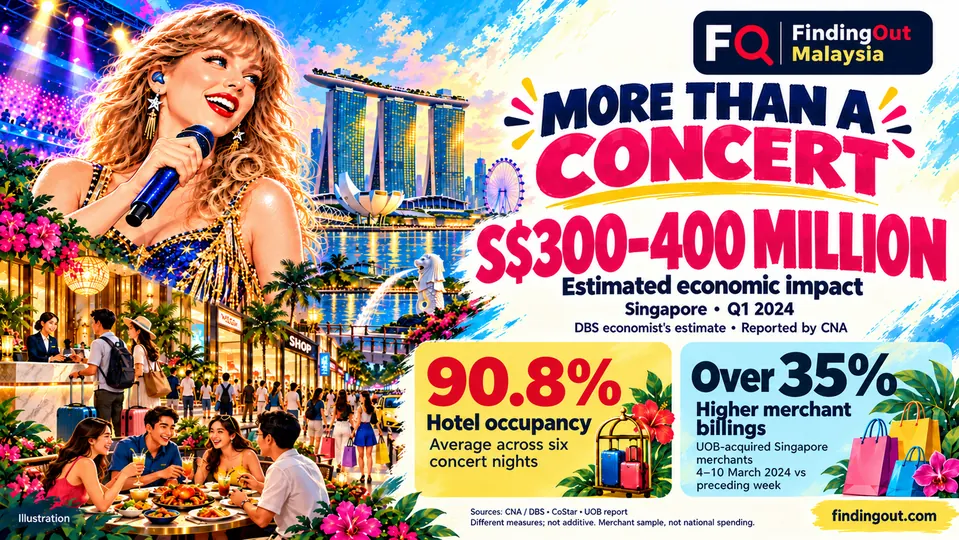
    Illustrated summary of the estimated S$300–400 million economic impact, 90.8% hotel occupancy across six concert nights, and over 35% growth in UOB-acquired merchant billings during the stated March 2024 comparison period
    Three different measures of activity around the concerts. The figures cover different periods and should not be added together.

    Travelling fans need accommodation, meals, transport and places to shop. The video follows those connections beyond the stadium. Three figures help explain the scale, provided their definitions stay clear:

    • S$300–400 million: DBS economist Chua Han Teng’s estimated contribution to Singapore’s economy in the first quarter of 2024, as reported by CNA. This was an estimate, not an audited profit figure.
    • 90.8% hotel occupancy: the average across Singapore’s six concert nights, according to CoStar hospitality data. This is an occupancy level, not a percentage increase.
    • Over 35% higher merchant billings: UOB reported this rise for its acquired merchants in Singapore during 4–10 March 2024 compared with the preceding week. It describes that merchant sample, not all spending across Singapore.

    Across the Causeway

    Some of the benefits also reached Johor Bahru. In its 15 April 2024 research report, RHB described concert-related business for local hotels, retailers, food and beverage outlets, and transport operators taking fans across the Causeway. Singapore hosted the performances, while nearby Malaysian businesses could still participate in the travel surrounding them.

    Smart Business or an Unfair Advantage?

    That is the question the film leaves with viewers. An exclusive deal can help a destination attract visitors and spending, while fans elsewhere face extra travel and expense. Taylor Swift’s drawing power turned a series of concerts into a discussion about tourism strategy, competition and the ties between neighbours.

    For the wider relationship behind this episode, explore Malaysia vs Singapore: A War Without Bullets? For another look inside the Dewan Rakyat, see They Really Said It: Awkward Malaysian Parliamentary Moments.

    Visual note: the cover and supporting cards are AI-generated illustrations. The video combines commentary, archive material and illustrative scenes; the full production credits are in the YouTube description.

    Watch the French version

    Prefer to watch in French? Enjoy the French edition below.

    French · 2 minutes 11 seconds

    Watch the French version on YouTube →

    Watch the Mandarin version

    Prefer to watch in Mandarin? Enjoy the Mandarin edition of the same story below.

    Mandarin · 2 minutes 12 seconds

    Watch the Mandarin version on YouTube →

    Watch next

    Enjoy looking a little deeper? Subscribe to FindingOut Malaysia on YouTube for new videos.

  • Malaysia vs Singapore: A War Without Bullets?

    Malaysia vs Singapore: A War Without Bullets?

    This is the English version. Watch the Mandarin version below ↓

    Two neighbours. Connected families. Decades of arguments over water, bridges, airspace, ships and money. Then came Taylor Swift.

    Malaysia and Singapore share far more than a border. Yet some of their most memorable exchanges have been about the things that divide them. This FindingOut Malaysia documentary follows that uneasy mix of closeness and competition, from the separation in 1965 to border reunions and the business of international concerts.

    “A war without bullets” is a metaphor for diplomatic disagreements and competing national interests. The film is a historical overview and commentary; its military parade footage does not depict hostilities between the two countries.

    1965: A Separation, Not an End to the Relationship

    Singapore became independent on 9 August 1965. Lee Kuan Yew’s emotional televised press conference remains one of the defining images of that separation. The Singapore government’s historical account records both the political split and his reaction.

    The border created two sovereign states, but it did not neatly divide family connections, working lives or shared resources. That tension runs through the film: the countries can disagree sharply while remaining deeply connected.

    Water and the Bridge That Never Was

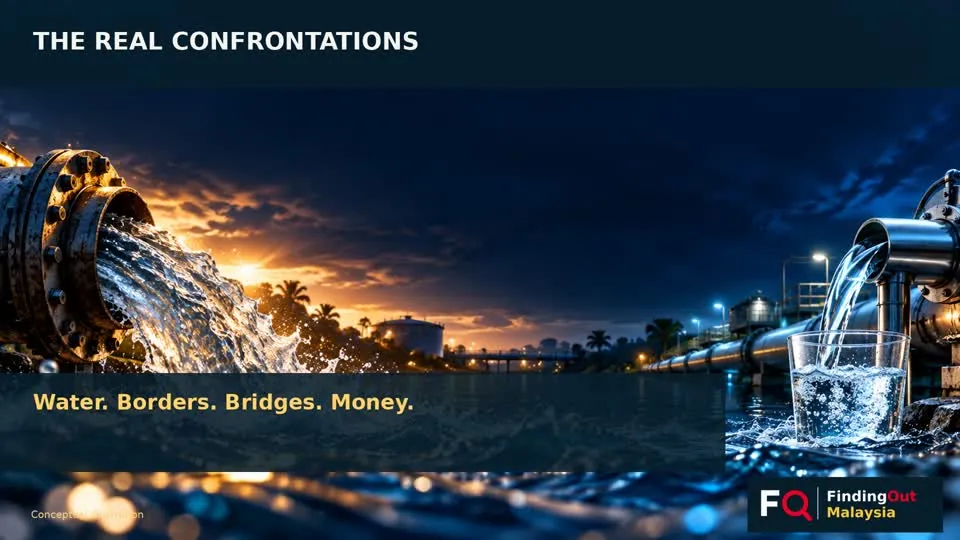
    FindingOut concept graphic introducing disputes over water, borders, bridges and money
    Water, borders, bridges and money: the film’s central themes. Concept illustration.

    The water debate is about the value of an essential resource and the terms of a longstanding agreement. Under the 1962 agreement, Singapore pays 3 Malaysian sen per 1,000 gallons of raw water, while Johor can buy treated water at 50 sen per 1,000 gallons. The agreement runs to 2061. These terms are set out in Singapore’s published account of the water agreements.

    The film includes Mahathir Mohamad’s disputed “3 sen versus RM60” comparison. It contrasts a raw-water purchase price with a treated-water retail charge. Those are different measures, so the comparison should not be read as a calculation of Singapore’s profit or as the price Johor pays for treated water.

    The proposed “crooked bridge” offers another example of how infrastructure became entangled with bilateral negotiations. Malaysia considered replacing its portion of the Causeway with a curved bridge, but abandoned the proposal in 2006. A contemporary statement by Malaysia’s Foreign Ministry, reproduced by the Malaysian Bar, explains the competing proposals and the decision not to proceed.

    Airspace and a Line in the Water

    In 2018–2019, disagreements over Seletar Airport’s landing procedures and a restricted area over Pasir Gudang brought aviation into the argument. The film includes Anthony Loke’s explanation of Malaysia’s concerns. The subsequent agreement matters too: Singapore withdrew the instrument landing procedures and Malaysia indefinitely suspended the restricted area, effective late on 5 April 2019, according to the joint transport ministers’ statement.

    At sea, overlapping port limits around Johor Bahru and Tuas created another dispute. On 8 April 2019, both countries suspended the overlapping limits as a step towards easing tensions and further boundary discussions. The Maritime and Port Authority’s announcement records that mutual suspension. The film’s maps are schematic illustrations, not surveyed boundaries.

    The Train That Left a Bill

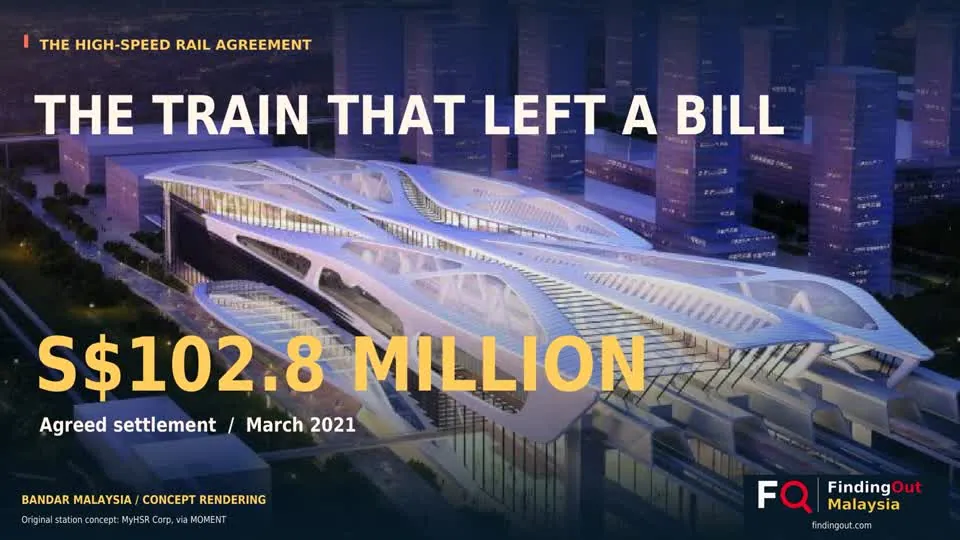
    FindingOut graphic showing the historical S$102.8 million Kuala Lumpur–Singapore high-speed rail settlement in March 2021
    The March 2021 settlement. The station image is a project concept rendering, not an operating HSR service. Original concept credit: MyHSR Corp, via Moment Solutions.

    The Kuala Lumpur–Singapore High-Speed Rail project turned the relationship into a discussion about costs and commitments. Following termination of the bilateral agreement on 31 December 2020, Malaysia paid Singapore S$102,815,576, with the joint statement of 29 March 2021 recording RM320,270,519.24 as the ringgit amount.

    It was an agreed full and final settlement for development and suspension-related costs. These are historical figures from that settlement, not a conversion at today’s exchange rate or a claim about the status of any later rail proposal.

    When the Border Closed, Families Felt It

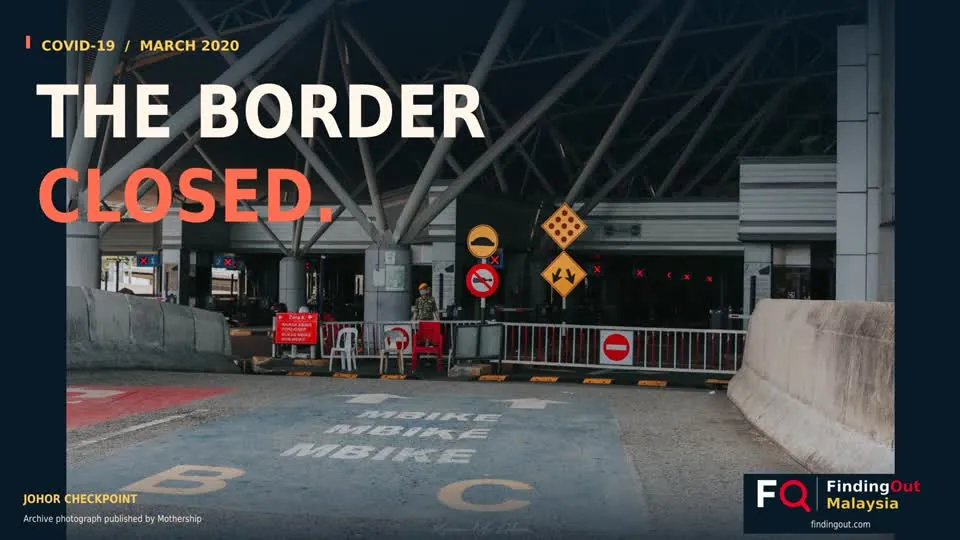
    FindingOut graphic recalling the March 2020 COVID-19 border restrictions at the Johor checkpoint
    March 2020: the pandemic interrupted everyday cross-border life. Checkpoint photograph as credited in the film, published by Mothership.

    The documentary then moves from government disputes to ordinary people. COVID-19 border restrictions separated workers from their families and interrupted journeys that had once been routine. The reunion footage shows the human side of the relationship: jobs on one side, loved ones on the other.

    The scenes of reopening refer to 1 April 2022, when the land borders reopened more broadly to fully vaccinated travellers. Some limited travel arrangements had already existed. The official reopening announcement explains what changed at that time.

    Then Came Taylor Swift

    FindingOut illustration of Taylor Swift holding a microphone, surrounded by Malaysian and Singaporean landmarks
    FindingOut illustration accompanying the discussion of Singapore’s exclusive Southeast Asian stop on the 2024 Eras Tour.

    The final turn is from border crossings to concert crowds. On 5 March 2024, then Singapore prime minister Lee Hsien Loong confirmed that agencies had negotiated an arrangement making Singapore Taylor Swift’s only Southeast Asian stop for the 2024 Eras Tour, with incentives from a tourism recovery fund. In the official press-conference transcript, he defended the deal as beneficial to Singapore and rejected the suggestion that it was unfriendly.

    That was an arrangement for the 2024 tour, not a permanent restriction on where the artist could perform. The film closes by placing two generations of Singapore’s leadership alongside a question for viewers: are these good neighbours, or simply neighbours who put their own interests first?

    Explore the Video

    The video is in English and runs approximately 4 minutes 35 seconds. These chapter links open the relevant moment on YouTube.

    Sources & Editorial Note

    The linked official statements and historical records provide context for the events discussed. The documentary combines archival excerpts, original recorded speech, AI narration, stock footage and editorial graphics. The cover and some other visuals are concept illustrations. Archive excerpts are shortened or reframed; the Anthony Loke excerpt is slowed to 75%. Recorded speakers’ voices are not AI imitations.

    Archive and image credits include CNA/Mediacorp, Times Now World, observer+ / Astro Awani, Anthony Loke’s published footage, Singapore-released maritime footage via Mothership, SSTV, Malay Mail, The Straits Times, TODAY, MyHSR Corp and credited concert photographers. Full source links, photo licences and music credits are recorded in the video description. Third-party rights remain with their owners; the presentation does not imply endorsement. For corrections, please use our contact page and identify the relevant passage or timestamp.

    For more FindingOut stories, explore What If Everyone Is Wrong About Malaysia? or They Really Said It: Awkward Malaysian Parliamentary Moments.

    Watch the Mandarin version

    Prefer to watch in Mandarin? Explore the same story in 马来西亚与新加坡:一场没有子弹的战争?

    Mandarin · 4 minutes 33 seconds

    Watch the Mandarin version on YouTube →

    Watch next

    Enjoy looking a little deeper? Subscribe to FindingOut Malaysia on YouTube for new videos.

  • They Really Said It: Awkward Malaysian Parliamentary Moments

    They Really Said It: Awkward Malaysian Parliamentary Moments

    This video is in English. Scroll down for the Malay, Tamil and Mandarin versions.

    Two exchanges. A few unforgettable words. And a debate that suddenly became about the language itself.

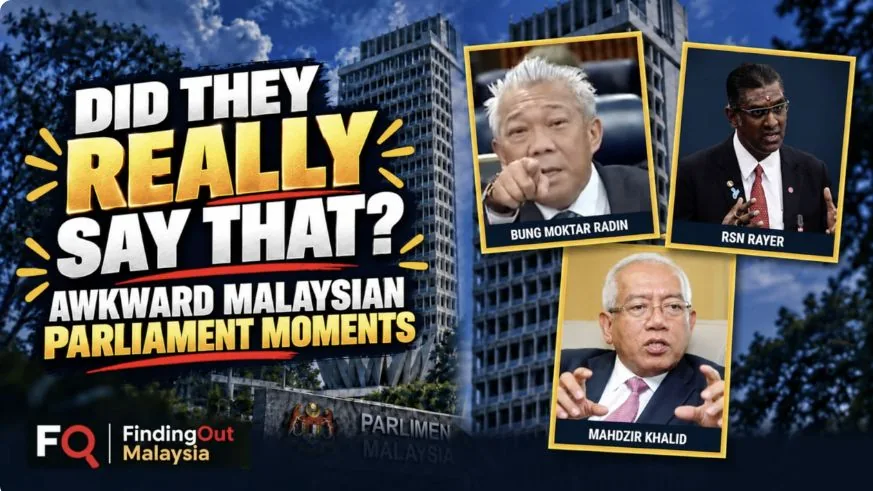
    FindingOut Malaysia revisits two awkward moments from the Dewan Rakyat in 2018: Bung Moktar Radin’s F-word exchange and later withdrawal, and RSN Rayer’s “kepala bapak” remark and Mahdzir Khalid’s objection. The compilation combines original parliamentary recordings with narration, subtitles and a little language context.

    These are separate historical events, presented by topic rather than in date order. The dates, constituencies and roles below refer to the time of the recordings.

    Content note: The videos contain strong language and discussion of expressions some viewers may find offensive.

    Moment 1 — Bung Moktar: The F-Word Exchange

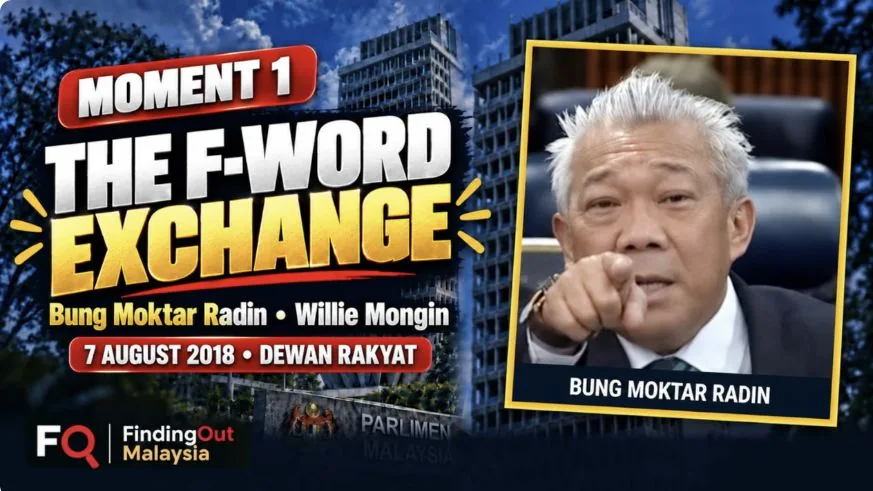
    FindingOut graphic introducing Bung Moktar Radin’s F-word exchange in the Dewan Rakyat on 7 August 2018

    7 August 2018 · Dewan Rakyat

    Bung Moktar Radin, then the MP for Kinabatangan, was discussing prices and a visit to Selayang’s wholesale market when Willie Mongin, the MP for Puncak Borneo, interrupted with a question referring to a casino. The exchange became heated, and Bung’s use of the F-word prompted objections from other MPs. The official parliamentary record for 7 August 2018 preserves the wider debate and the ensuing exchanges.

    What happened later? The video also includes the withdrawal discussion from later that afternoon. Bung withdrew the remark and acknowledged that the language was impolite, as FMT reported that day. The “Later That Day” card matters: the withdrawal did not immediately follow the first outburst.

    A note on Bung Moktar: Bung Moktar Radin passed away on 5 December 2025, aged 66, in Kota Kinabalu, as reported by Bernama. The parliamentary footage featured here dates from 2018.

    Moment 2 — RSN Rayer and Mahdzir Khalid: “Kepala Bapak”

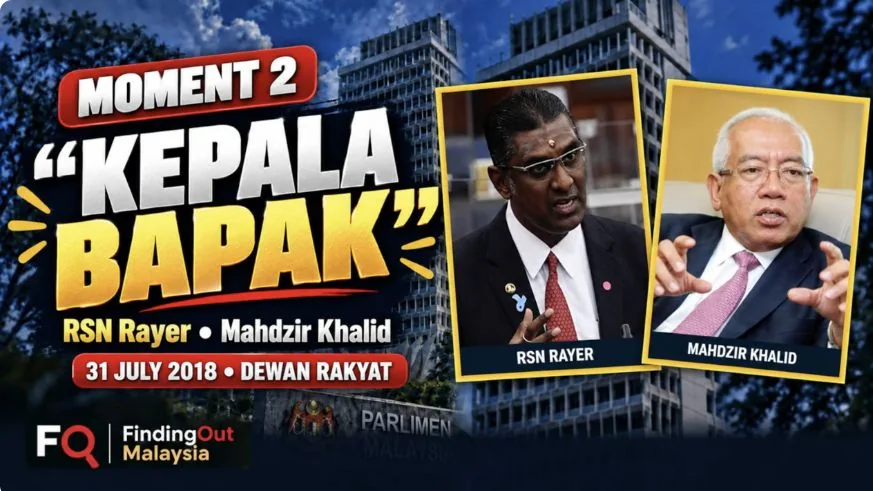
    FindingOut graphic introducing RSN Rayer and Mahdzir Khalid’s kepala bapak exchange on 31 July 2018

    31 July 2018 · Dewan Rakyat

    A week earlier, RSN Rayer, the MP for Jelutong, was questioning the previous administration’s record on police welfare and facilities. His use of “kepala bapak” drew an immediate objection from Mahdzir Khalid, the MP for Padang Terap, who challenged the language and urged him to use facts in the debate. Malaysiakini’s contemporary account describes the exchange and the calls for the words to be withdrawn.

    The selected footage lets viewers hear both Rayer’s remark and Mahdzir’s response. It is a reminder of how quickly a discussion about public services can turn into an argument over what is acceptable to say in Parliament.

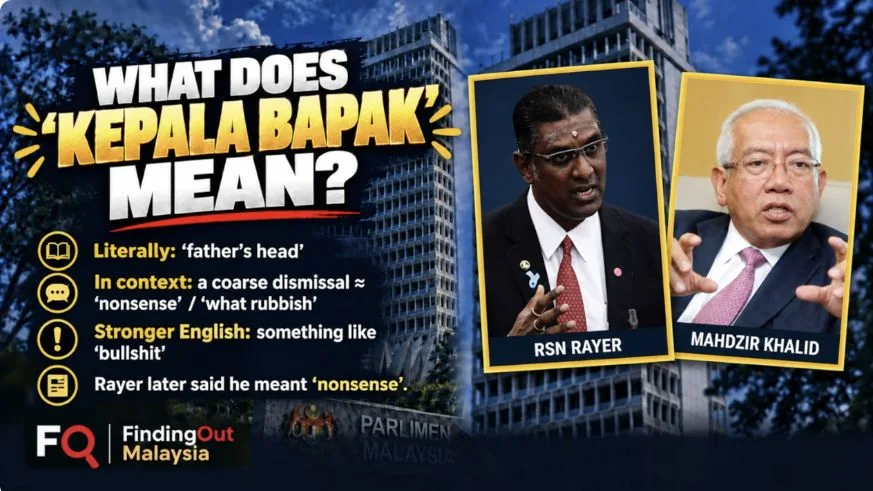
    What Does “Kepala Bapak” Mean?

    FindingOut language card explaining the literal wording and colloquial force of kepala bapak

    Literally, the Malay words mean “father’s head.” In this exchange, the phrase works as a coarse dismissal, roughly along the lines of “nonsense” or “what rubbish.” The literal translation alone does not convey the tone, and its force depends on context and delivery.

    Rayer later said that he meant “nonsense” or “mengarut” and denied intending an insult, according to MalaysiaGazette’s report of 1 August 2018. That was his explanation; Mahdzir’s objection shows that the wording was received differently in the chamber. The English comparisons in the video are approximate explanations, not exact or official translations.

    Watch in Malay, Tamil or Mandarin

    There are four versions of this compilation. The English video is at the top of the page; the Malay, Tamil and Mandarin versions are below. Each provides narration and presentation in the selected language while retaining the original speech in the parliamentary excerpts.

    Sources & Editorial Note

    The archival parliamentary excerpts are credited to FMT / Free Malaysia Today, carrying RTM / Parliament broadcast credits, and KiniTV / Malaysiakini. The linked parliamentary record and contemporary reports provide further context. Excerpts have been shortened for presentation; statements and allegations remain attributable to their speakers.

    FindingOut Malaysia adds editorial narration, graphics and translations. Narration uses AI-generated voices; the parliamentary speech is the original recorded audio. The graphic cards are editorial composites, not additional documentary footage. Translations are FindingOut’s explanations, not official parliamentary translations.

    FindingOut Malaysia is independent. The presentation does not imply endorsement by Parliament, the broadcasters or the people shown. Rights in third-party footage, photographs, music and other material remain with their respective owners. For factual, translation or source-credit corrections, please use our contact page and identify the relevant timestamp.

    For a different side of Malaysian public life, explore Malaysia’s Three Prime Ministerial Tenors and Prime Minister Anwar’s Mixtape.

    Watch next

    Enjoy looking a little deeper? Subscribe to FindingOut Malaysia on YouTube for new videos.

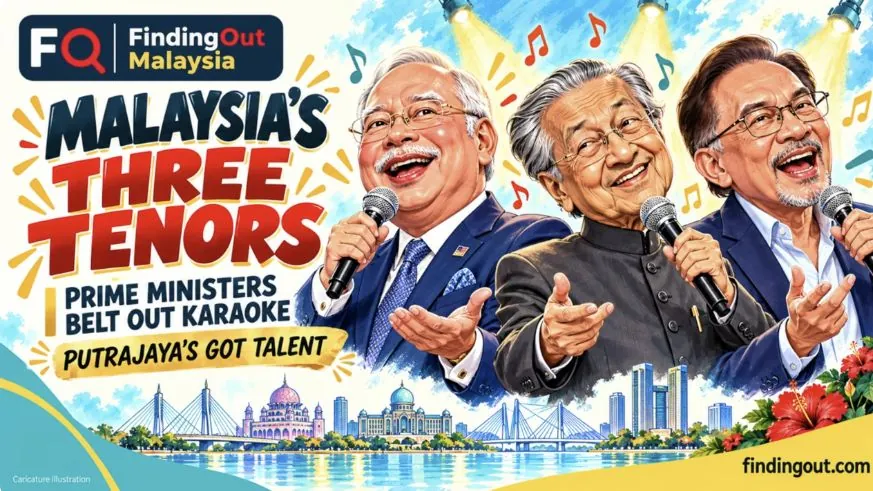
  • Malaysia’s Three Prime Ministerial Tenors — Najib, Mahathir and Anwar

    Malaysia’s Three Prime Ministerial Tenors — Najib, Mahathir and Anwar

    This video is in English. Scroll down for the Malay, Tamil and Mandarin versions.

    Three Malaysian leaders. Three songs. Three very different styles!

    Najib Razak, Dr Mahathir Mohamad and Anwar Ibrahim take the microphone in three memorable musical moments. Enjoy “The Young Ones”, “My Way” and “Sampaikan Salam Cintaku”, with Anwar joined by Alleycats legend David Arumugam.

    This light-hearted FindingOut Malaysia compilation brings together performances from different years and events. “Three Prime Ministerial Tenors” is a playful title, rather than a technical classification of their voices. The three leaders were not performing together in a joint concert.

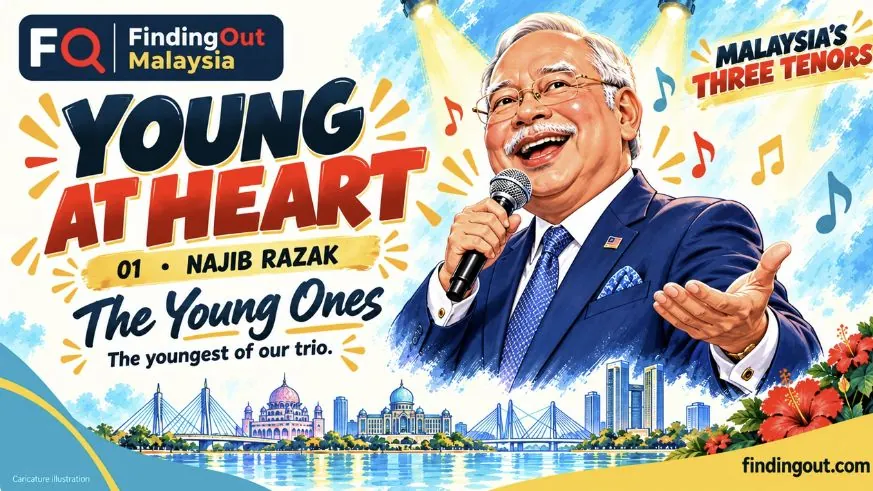
    Track 1 — Najib Razak: Young at Heart

    Illustrated card of Najib Razak singing The Young Ones — Young at Heart

    “The Young Ones” · Putrajaya · 10 November 2016

    First up is Najib, the youngest of our three singers. “The Young Ones” seems a fitting choice: a microphone, a familiar tune and a little musical diplomacy.

    The song’s meaning and background: The title points to youth, while the song celebrates love and making the most of the present. Associated with Cliff Richard and The Shadows, it is the title song from the film The Young Ones and a familiar part of their early-1960s repertoire. It was written by Sid Tepper and Roy C. Bennett, as listed in the songwriting credits. The soundtrack also appears in Cliff Richard’s official discography.

    The moment in the video: Najib sings at a dinner for Philippine President Rodrigo Duterte at Seri Perdana in Putrajaya on 10 November 2016. The footage is credited to RTVM / Presidential Communications, Philippines, and was published by Rappler as “Duterte, Najib bond over singing at dinner”. A well-known pop tune gives this official occasion a relaxed musical interlude.

    Watch Najib’s performance from 0:21 →

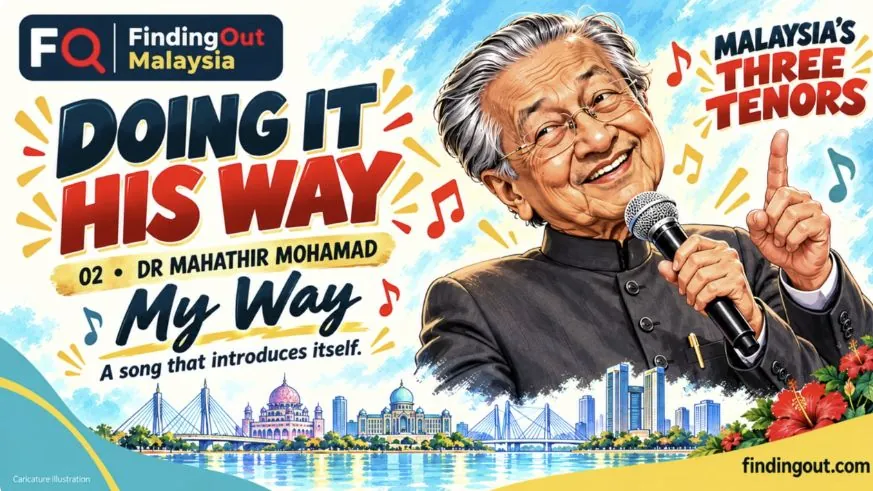
    Track 2 — Dr Mahathir Mohamad: Doing It His Way

    Illustrated card of Dr Mahathir Mohamad singing My Way — Doing It His Way

    “My Way” · Malam SAHOCA, Kuala Lumpur · September 2015

    Next, Dr Mahathir. His choice of song needs no introduction. Whatever you think of his politics, he certainly did things his way. Sing it, Tun!

    The song’s meaning and history: “My Way” is a retrospective: a singer looks back on life, its choices and its regrets, with a sense of independence. Paul Anka wrote the English lyrics for Frank Sinatra, whose recording was released in 1969. The melody comes from the French song “Comme d’habitude” — “As Usual” — credited to Jacques Revaux, Claude François and Gilles Thibaut. Anka’s English words tell a different story from the French original. Anka’s own account explains how he wrote with Sinatra’s voice and outlook in mind.

    The moment in the video: Mahathir performs at Malam SAHOCA in Kuala Lumpur in September 2015. Astro Awani’s contemporary report identifies his choice of “My Way”, notes Siti Nurhaliza’s participation and records that the gathering also celebrated his 90th birthday. SAHOCA is the alumni association of Sultan Abdul Hamid College in Alor Setar. The report links the performance recording used as the source.

    Watch Mahathir’s performance from 1:23 →

    Track 3 — Anwar Ibrahim: Sending His Love

    Illustrated card of Anwar Ibrahim singing Sampaikan Salam Cintaku — Sending His Love

    “Sampaikan Salam Cintaku” · Shah Alam · January 2019

    Finally, Anwar brings a little romance to the microphone. “Sampaikan Salam Cintaku” means “Send my love”, and he is joined by the legendary singer from Alleycats. Quite a musical duo!

    The song’s meaning and background: The Malay title can also be rendered more literally as “Convey my loving regards.” It carries an affectionate message to someone missed. The Alleycats recording dates to 1986; the recording credits name Hamdan Atan (A. Ali) as composer, Juwie as lyricist and M. Nasir as arranger. David and Loganathan Arumugam are credited as vocalists on that recording.

    The moment in the video: At a PKR gala dinner in Shah Alam in January 2019, David Arumugam invited Anwar to join him in a duet. mStar’s report describes the audience’s applause and notes that Dasya Logan, daughter of the late Loganathan Arumugam, also accompanied the performance. This was before Anwar became prime minister. Footage is credited to The Star / Star TV.

    Watch Anwar and David Arumugam from 2:24 →

    For more of Anwar’s musical appearances, explore Prime Minister Anwar’s Mixtape — Across Three Musical Worlds.

    Watch in Malay, Tamil or Mandarin

    There are four versions of this compilation. The English video is at the top of the page; the Malay, Tamil and Mandarin versions are below. Each uses narration and presentation in the selected language, while the singing excerpts retain their original recorded sound.

    Which Performance Made You Smile?

    Three prime ministers. Three songs. Three different styles. Which performance made you smile the most? Tell us in the comments, like the video, and subscribe to FindingOut Malaysia for more stories with a different tune. Keep the comments friendly — the vote here is about singing!

    Sources & Editorial Note

    The linked reports, footage and music credits provide the event context and song background. The dates refer to the individual performances; this compilation brings together separate occasions. The short explanations above describe the songs’ themes without reproducing their lyrics.

    The narration and illustrated cards were created with AI assistance. The singing excerpts retain the recorded performances; the illustrations are creative artwork, not documentary photographs. No endorsement by the people, artists, broadcasters or organisations shown is implied.

    Background music beneath the narrated cards: “Monkeys Spinning Monkeys” by Kevin MacLeod, licensed under Creative Commons Attribution 4.0. The track was trimmed, faded and mixed beneath narration. It was not added over the original singing performances.

    Production, editorial presentation and compilation: FindingOut Malaysia. Rights in third-party footage, songs, performances and recordings remain with their respective owners. The Creative Commons licence above applies to the background track only. Source credits identify the material used and do not imply ownership or permission.

    Watch next

    Enjoy looking a little deeper? Subscribe to FindingOut Malaysia on YouTube for new videos.

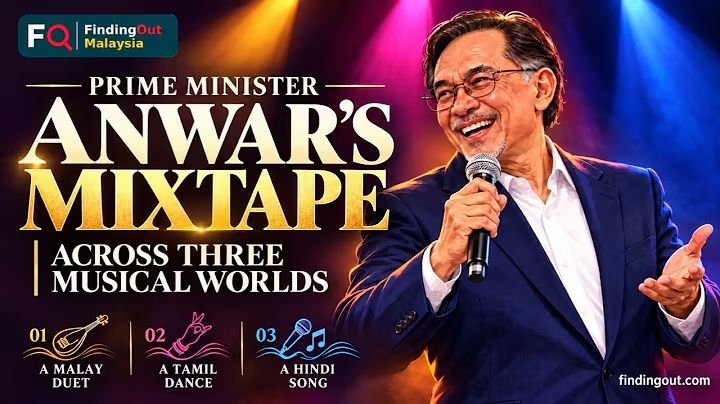
  • Prime Minister Anwar’s Mixtape — Across Three Musical Worlds

    Prime Minister Anwar’s Mixtape — Across Three Musical Worlds

    This video is in English. Scroll down for the Malay, Tamil and Mandarin versions.

    A Malay duet. A Tamil dance. A Hindi classic.

    In Prime Minister Anwar’s Mixtape, FindingOut Malaysia brings together three musical moments: Anwar Ibrahim sharing a song with David Arumugam, joining an MGR impersonator’s dance, and singing with piano accompaniment in New Delhi.

    Each selection carries its own history, from Malaysian pop to Tamil cinema and classic Hindi film music. Below, we explore what the song titles mean, where the music comes from, and the setting of each performance.

    The excerpts come from separate events in different years, including moments before Anwar became Prime Minister. They have been brought together as a musical compilation.

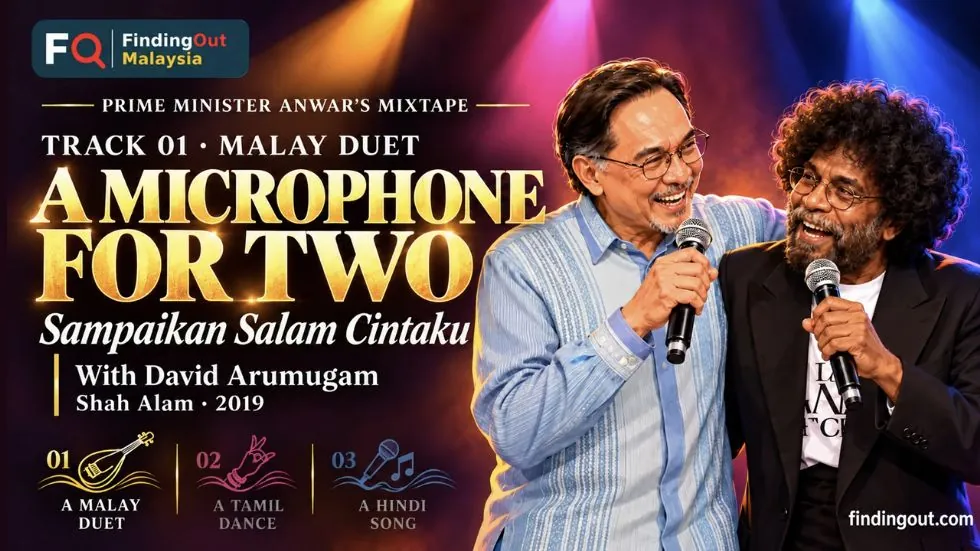
    Track 1 — A Malay Duet

    Illustrated card for Sampaikan Salam Cintaku: A Microphone for Two

    “Sampaikan Salam Cintaku” · Shah Alam · January 2019

    The meaning: The Malay title can be rendered naturally in English as “Send my love”, or more literally, “Convey my loving regards.” It is an affectionate message to someone missed, giving the song its warm, wistful character.

    The song’s background: “Sampaikan Salam Cintaku” was composed by A. Ali (Hamdan Atan), with lyrics by Juwie. It belongs to the Alleycats catalogue and the band’s 1986 Sampaikan Salam album. That places it in the Malaysian pop music of the 1980s, decades before this duet. The album’s recording credits list David and Loganathan Arumugam as vocalists. For listeners who grew up with Alleycats, the melody can bring a strong sense of familiarity and nostalgia.

    The moment in the mixtape: David Arumugam invited Anwar to join him at a PKR gala in Shah Alam in January 2019. mStar’s contemporary report describes the duet and the audience’s applause. The appeal here is the shared performance: a familiar singer, a familiar song, and a guest joining in. Footage is credited to The Star / StarTV.

    Watch Track 1 from 0:10 in the English mixtape →

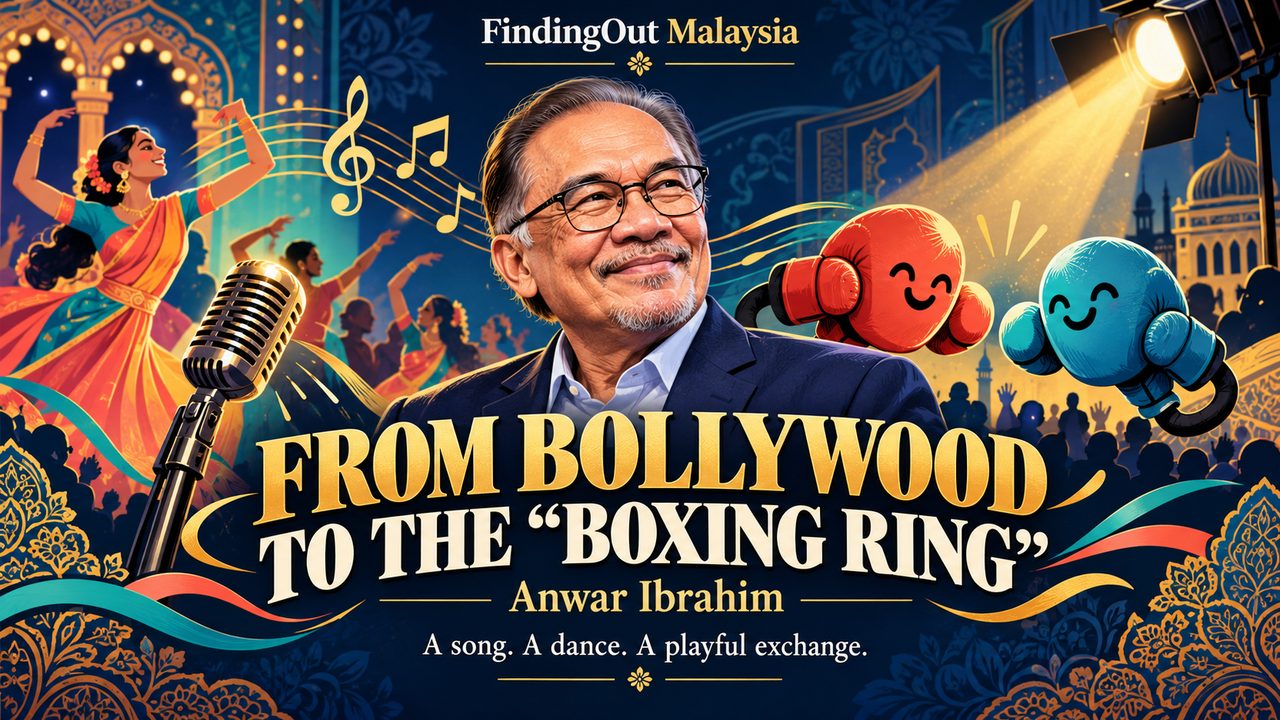
    Track 2 — A Tamil Dance

    Illustrated card for Naan Aanaiyittal: Let the Music Move You

    “Naan Aanaiyittal” · Desa Mentari, Petaling Jaya · 2018

    The meaning: “Naan Aanaiyittal” means approximately “If I give the order.” Its message is assertive: using authority to challenge wrongdoing and protect ordinary people from hardship. That gives it a very different mood from the gentle longing of the Malay song.

    The song’s background: The song comes from the 1965 Tamil film Enga Veettu Pillai, starring M. G. Ramachandran, widely known as MGR. The recorded voice is T. M. Soundararajan, with lyrics by Vaali and music by Viswanathan–Ramamoorthy, as credited by Saregama. MGR performed the song on screen; Soundararajan was the playback singer.

    The song became closely associated with MGR’s screen image as a defender of the poor. A retrospective on Vaali recalls its place in the film and its promise of relief from suffering. This background helps explain the commanding poses and energetic gestures that an MGR impersonator brings to the stage.

    The moment in the mixtape: In 2018, Anwar joined an MGR impersonator at an Indian cultural night in Desa Mentari. KiniTV’s report describes a cheering, clapping crowd. Anwar is dancing here, and the performer beside him is an impersonator of the late star.

    Watch Track 2 from 1:26 in the English mixtape →

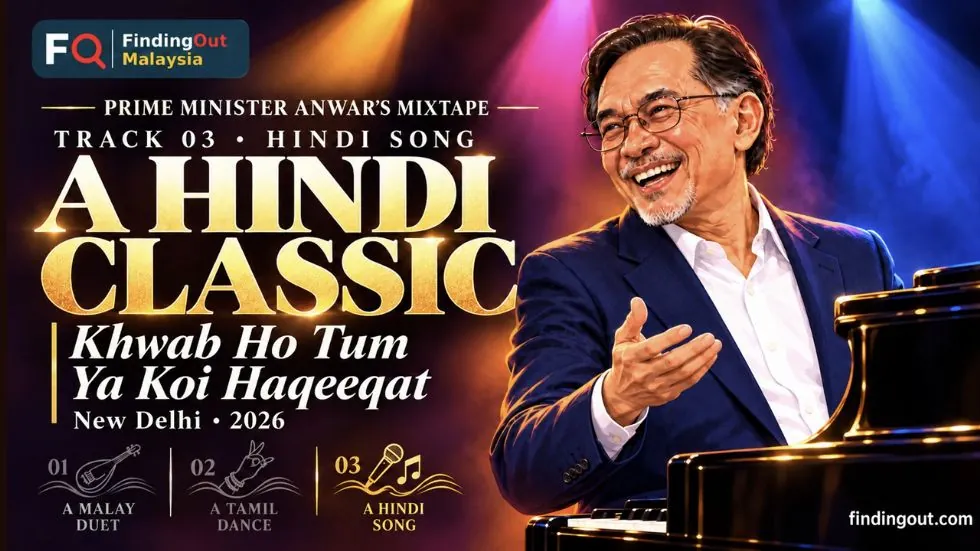
    Track 3 — A Hindi Classic

    Illustrated card for Khwab Ho Tum Ya Koi Haqeeqat: A Hindi Classic

    “Khwab Ho Tum Ya Koi Haqeeqat” · New Delhi · September 2026

    The meaning: The title asks, approximately, “Are you a dream, or are you real?” It expresses romantic wonder: the feeling that someone is so captivating that their presence seems almost dreamlike. The mood is playful and admiring.

    The song’s history: This is a Kishore Kumar song from the 1965 Hindi film Teen Devian, starring Dev Anand. Its music was composed by S. D. Burman, with lyrics by Majrooh Sultanpuri. The film’s archived song booklet records those creative credits, while the soundtrack listing identifies Kishore Kumar’s recording.

    The original belongs to the era when playback singers supplied the voices for stars’ on-screen musical performances. Here, Kishore Kumar’s voice is associated with Dev Anand’s screen presence. Knowing that distinction helps place the song within Hindi cinema’s musical tradition. More than sixty years after the film, it is still being revisited in performances such as this one.

    The moment in the mixtape: Anwar sings the classic with piano accompaniment during his New Delhi visit in September 2026. Bernama reported that the impromptu rendition, shared on social media during the BRICS summit visit, drew appreciative reactions in India. It brings the compilation to a quieter close after the Tamil dance. The video credits Anwar’s original social-media material and The Star’s video coverage.

    Watch Track 3 from 2:18 in the English mixtape →

    Watch in Malay, Tamil or Mandarin

    The three versions below present the same musical moments in Malay, Tamil and Mandarin. The English version is at the top of this page. Each has narration and presentation in the selected language, while the performances retain their original songs and sound.

    What Goes on the Mixtape Next?

    A message of love, a bold promise and a moment of romantic wonder: the three songs take us through very different musical moods. Which performance is your favourite? Share your thoughts in the comments below, or suggest another musical moment for a future FindingOut compilation.

    Sources & Editorial Note

    The linked reports and music catalogues provide the event context and song background. Title meanings above are brief English explanations, rather than full translations of the lyrics. Dates refer separately to the original songs and to Anwar’s performances.

    The illustrated cards and narration in the videos were created with AI assistance. The illustrations are creative artwork, not documentary photographs. The performance excerpts retain their recorded sound. English subtitles in the English version cover narration and brief performance labels, rather than translating the complete song lyrics.

    Background music beneath the narrated cards: “Monkeys Spinning Monkeys” by Kevin MacLeod, licensed under Creative Commons Attribution 4.0; trimmed, faded and mixed. No additional background music was placed over the three performance excerpts.

    Third-party footage, songs and recordings remain subject to their respective rights holders’ rights. FindingOut Malaysia’s contribution is the editorial selection, contextual presentation, narration and graphic design. This independent presentation is for musical interest, commentary and entertainment; no affiliation with or endorsement by the people, organisations or rights holders featured is implied.

    Watch next

    Enjoy looking a little deeper? Subscribe to FindingOut Malaysia on YouTube for new videos.

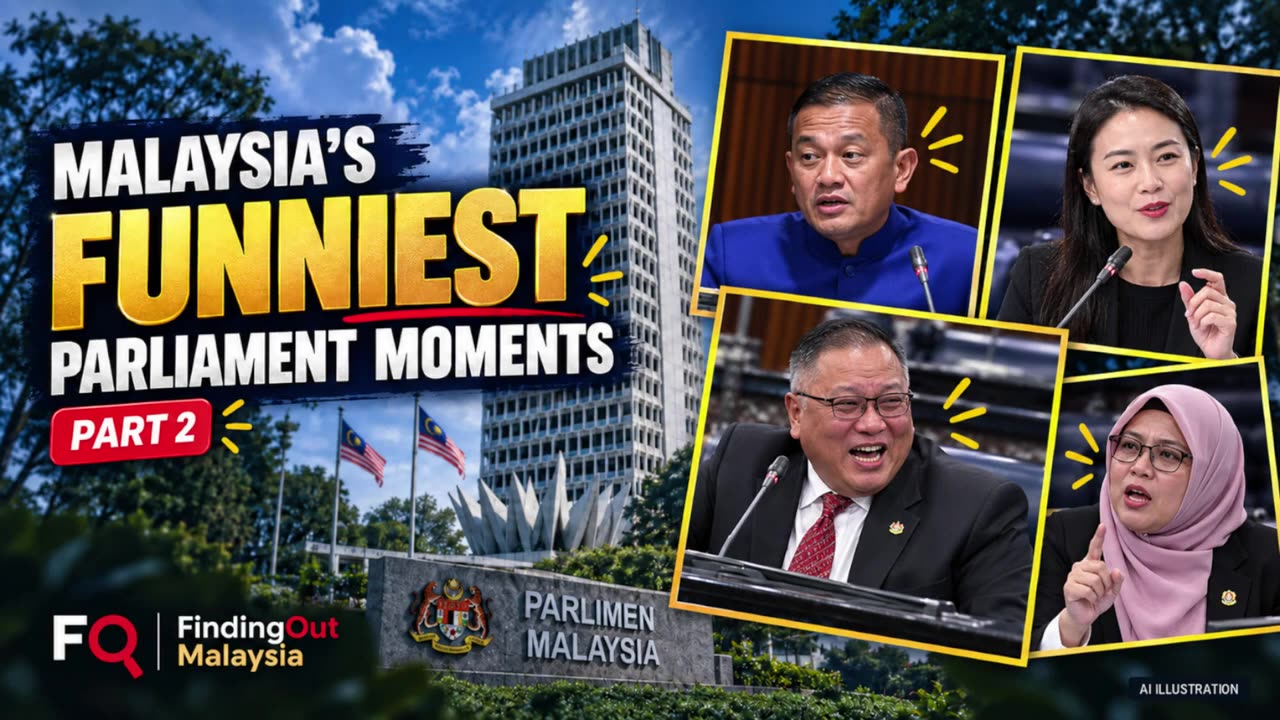
  • Malaysia’s Funniest Parliament Moments — Part 1

    Malaysia’s Funniest Parliament Moments — Part 1

    Parliament is serious business — but not every moment goes according to plan.

    Malaysia’s Dewan Rakyat has seen its share of heated debates, political arguments and serious policy discussions. Every now and then, however, something completely unexpected happens and the chamber becomes unintentionally funny.

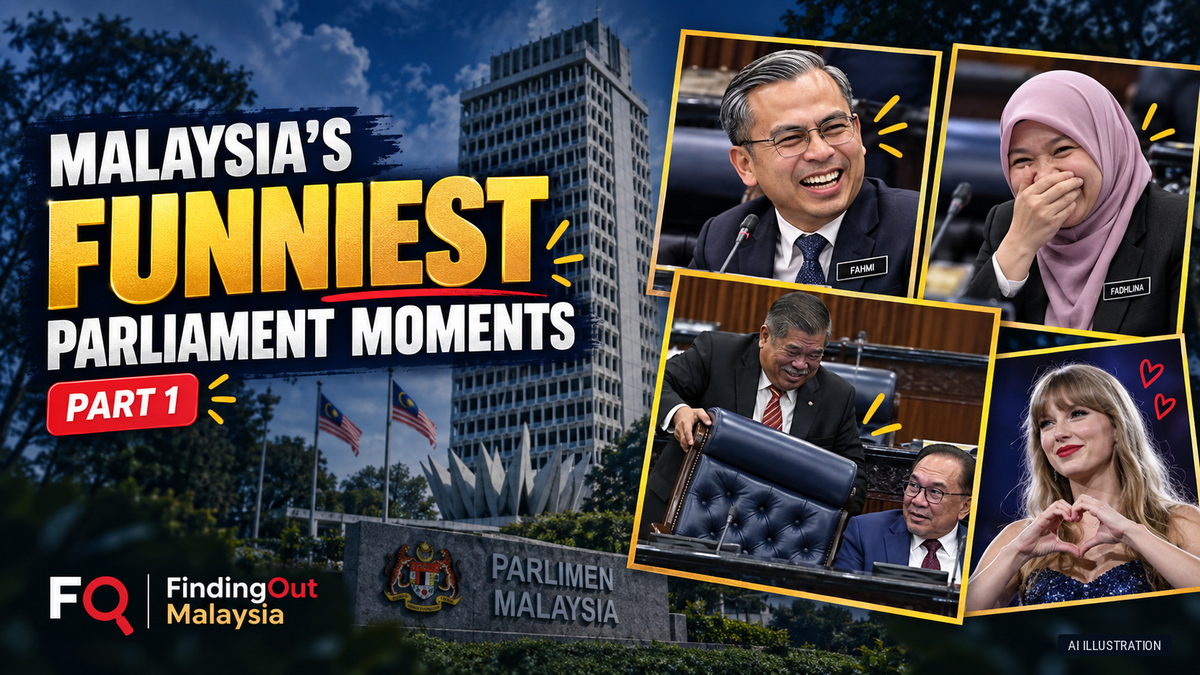
    In Part 1 of Malaysia’s Funniest Parliament Moments, FindingOut Malaysia looks back at three lighter moments: a pop-culture misunderstanding involving Taylor Swift, a perfectly timed comeback from the Education Minister, and a piece of quiet visual comedy unfolding behind the Opposition Leader.

    Watch the video below, or scroll down for the story behind each moment.

    This is the English version. Scroll down for the Malay, Mandarin and Tamil versions of Part 1.

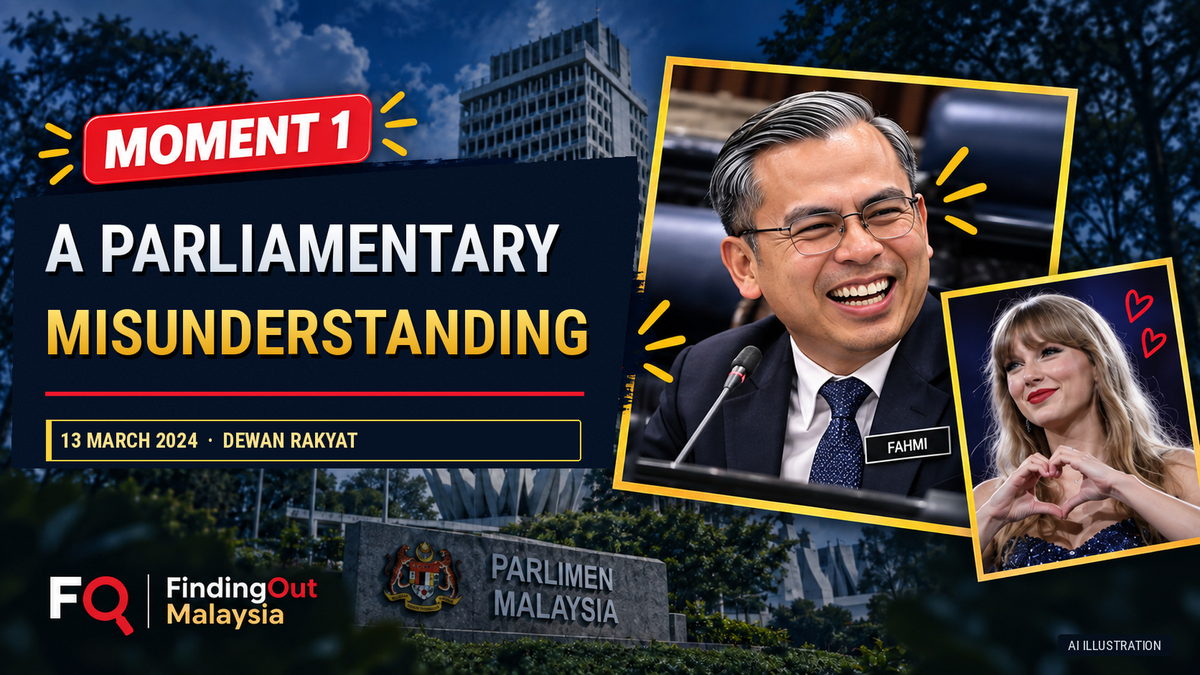
    Moment 1 — A Parliamentary Misunderstanding

    Fahmi Fadzil and Taylor Swift graphic for a parliamentary misunderstanding in Malaysia’s Dewan Rakyat

    13 March 2024 · Dewan Rakyat

    Communications Minister Fahmi Fadzil was speaking about Taylor Swift and her fans when an otherwise ordinary pop-culture reference suddenly caused confusion in the chamber.

    Taylor Swift’s fans are commonly known as “Swifties.” But when Fahmi used the term, Deputy Speaker Ramli Mohd Nor appeared to hear something quite different — turning “Swifties” into something that sounded remarkably like “striptease.”

    Fahmi quickly clarified what he meant, repeating the reference to Taylor Swift, while the misunderstanding drew amusement from those in the chamber.

    It was a very short exchange, but that was precisely what made it funny: a perfectly innocent word, a momentary misunderstanding, and Parliament briefly trying to keep a straight face.

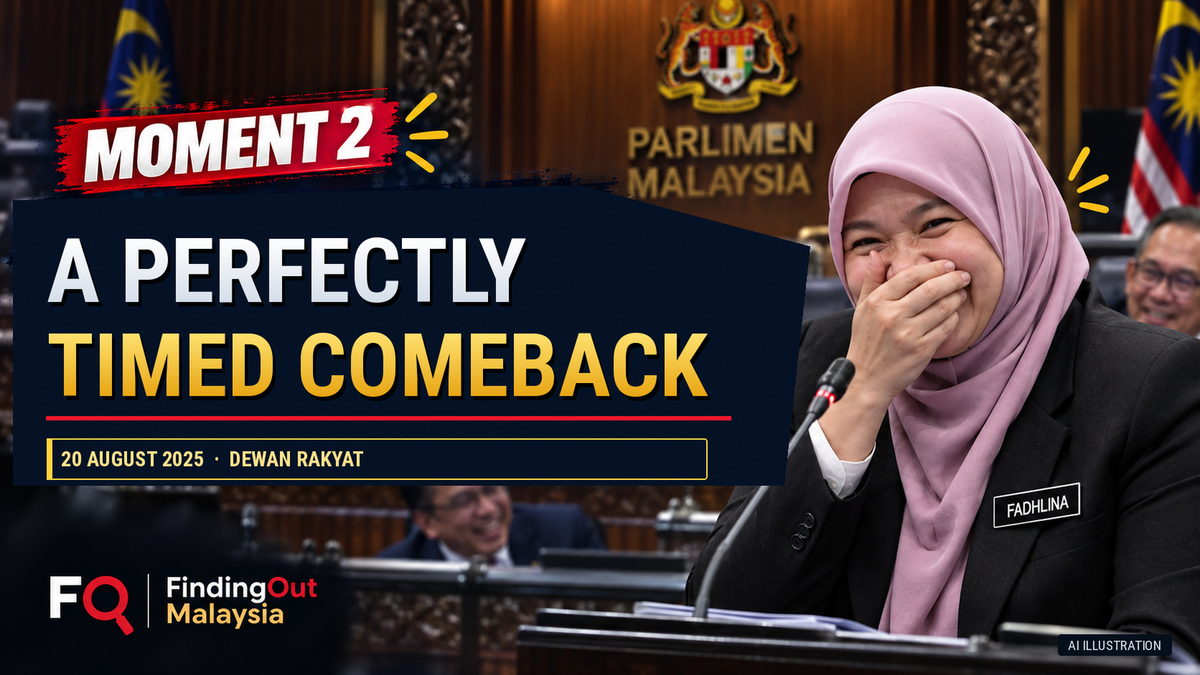
    Moment 2 — A Perfectly Timed Comeback

    Fadhlina Sidek graphic for a light-hearted Dewan Rakyat exchange in Malaysia’s Parliament

    Education Minister Fadhlina Sidek was winding up her ministry’s debate when she was asked to move a little closer to the microphone.

    What should have been a routine technical adjustment quickly turned into a light-hearted exchange involving Dewan Rakyat Speaker Johari Abdul.

    Fadhlina responded with a line that immediately brought laughter to the chamber:

    “Tan Sri Speaker, my husband is watching this live.”

    Sometimes parliamentary humour does not need a long argument or an elaborate joke. A quick response delivered at exactly the right moment is enough.

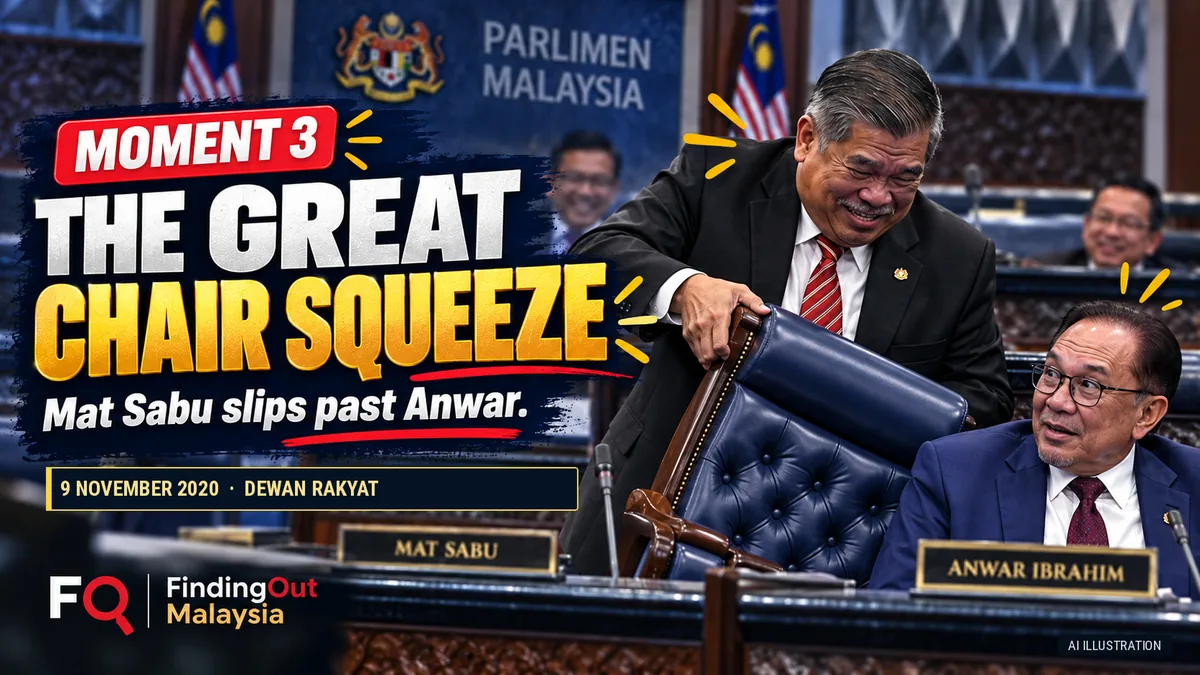
    Moment 3 — The Great Chair Squeeze

    Mat Sabu and Anwar Ibrahim graphic for the Great Chair Squeeze in Malaysia’s Dewan Rakyat

    9 November 2020 · Dewan Rakyat

    In 2020, Anwar Ibrahim was Malaysia’s Opposition Leader, while Mohamad Sabu — better known as Mat Sabu — was Amanah president.

    As Anwar continued delivering his speech, Mat Sabu attempted to make his way back to his seat behind him. What should have been a straightforward walk past became a small exercise in parliamentary manoeuvring.

    The chair had to move. Mat Sabu had to squeeze through the narrow space. Then everything had to be carefully put back into place — all while Anwar continued speaking.

    It is classic visual comedy precisely because nobody stops to make a joke about it.

    Getting through a debate is one thing. Getting back to your seat is another.

    Continue with Part 2

    These are only three of the lighter moments that have taken place in Malaysia’s Parliament.

    Some are funny because of what was said. Others are funny because of timing, misunderstanding, or simply what happened in the background while serious business continued around them.

    Which moment made you laugh the most?

    Watch Malaysia’s Funniest Parliament Moments — Part 1 above, then continue with Part 2 — Alice Lau, a royal one-liner and Tiong King Sing, available in English, Malay, Mandarin and Tamil.

    Sources & Editorial Note

    The parliamentary moments featured on this page are based on publicly available recordings and records of Dewan Rakyat proceedings.

    Key sources:
    Moment 1: Parliament of Malaysia — Dewan Rakyat proceedings and Hansard, 13 March 2024.
    Moment 2: Berita RTM — Parliament afternoon sitting, 20 August 2025; additional close-up footage from The Star.
    Moment 3: Dewan Rakyat sitting, 9 November 2020; published video reference from World of Buzz.

    Source material includes Parliament of Malaysia recordings and Hansard, Berita RTM, The Star, and published footage relating to the respective incidents.

    Short excerpts are presented for commentary, review, historical context and public-interest discussion. Copyright in the original third-party footage remains with the respective owners and broadcasters.

    The description of these incidents as “funniest” is a subjective editorial opinion and is intended as light-hearted commentary. FindingOut Malaysia does not intend to allege misconduct, illegality or wrongdoing by any person appearing in the material.

    Some promotional graphic cards contain AI-generated or digitally created illustrative imagery and should not be interpreted as documentary photographs of the incidents.

    Watch Part 1 in other languages

    The same three Parliament moments are now available in Malay, Mandarin and Tamil. Choose your preferred version below.

    Malay version

    Watch the Malay version on YouTube

    Mandarin version

    Watch the Mandarin version on YouTube

    Tamil version

    Watch the Tamil version on YouTube

    Watch next

    Enjoy looking a little deeper? Subscribe to FindingOut Malaysia on YouTube for new videos.